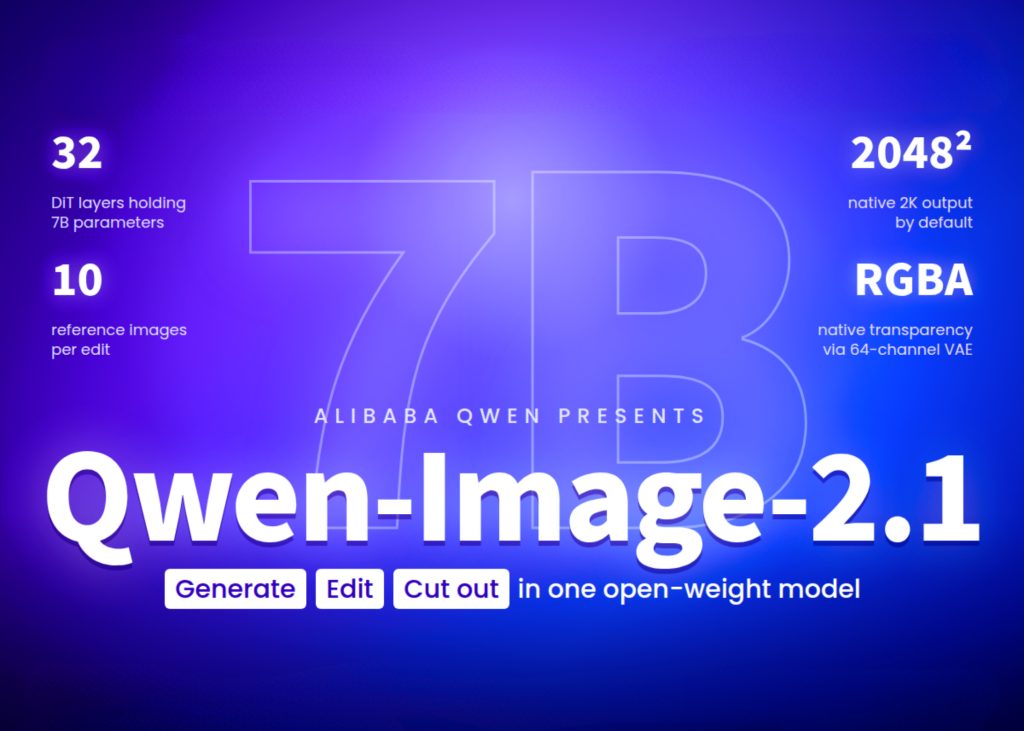
Alibaba Qwen Releases Qwen-Image-2.1: A 7B Open-Weight Model for Image Generation and Editing
Alibaba's Qwen team has released Qwen-Image-2.1, a unified 7B parameter open-weight model for image generation and multi-reference editing.
Alibaba's Qwen team has released Qwen-Image-2.1, a unified 7B parameter open-weight model for image generation and multi-reference editing.
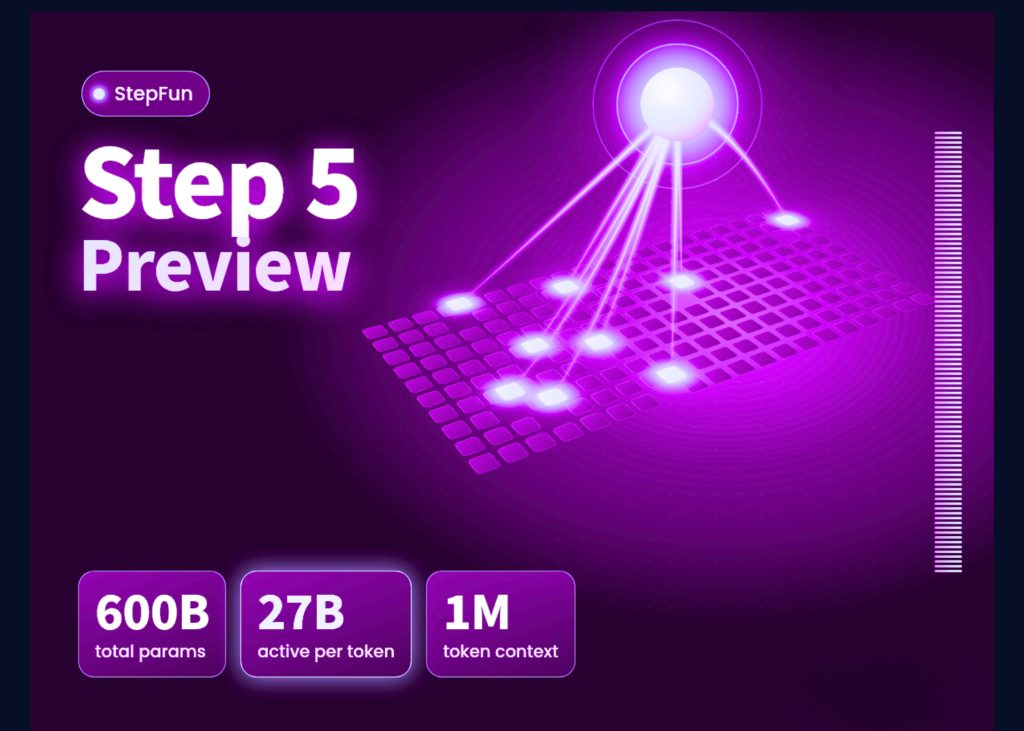
StepFun launched its 600B-parameter Step 5 Preview model, optimizing cost and long-horizon reasoning for agentic workloads.
Alibaba released Qwen-Image-2.1, a 7-billion parameter open-weight model with native transparent layer support for advanced image generation and editing.
Tencent introduced Gander, an AI architecture that maintains continuous real-time voice chat while delegating complex reasoning to background models.

AI-driven bug hunting is fueling an unprecedented surge in identified software vulnerabilities, straining IT teams and open-source maintainers.
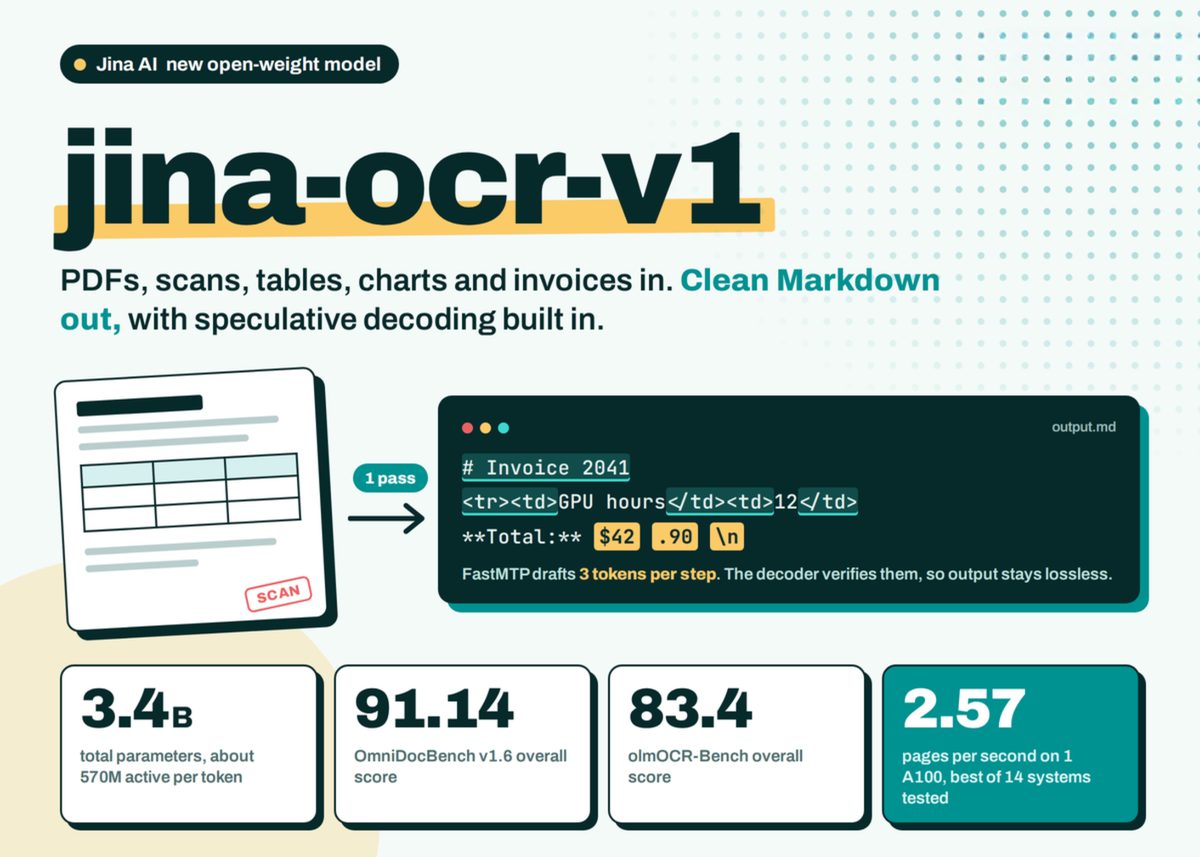
Jina AI launched jina-ocr-v1, a 3.4B MoE document parser designed to execute fast, low-cost visual parsing using speculative decoding.
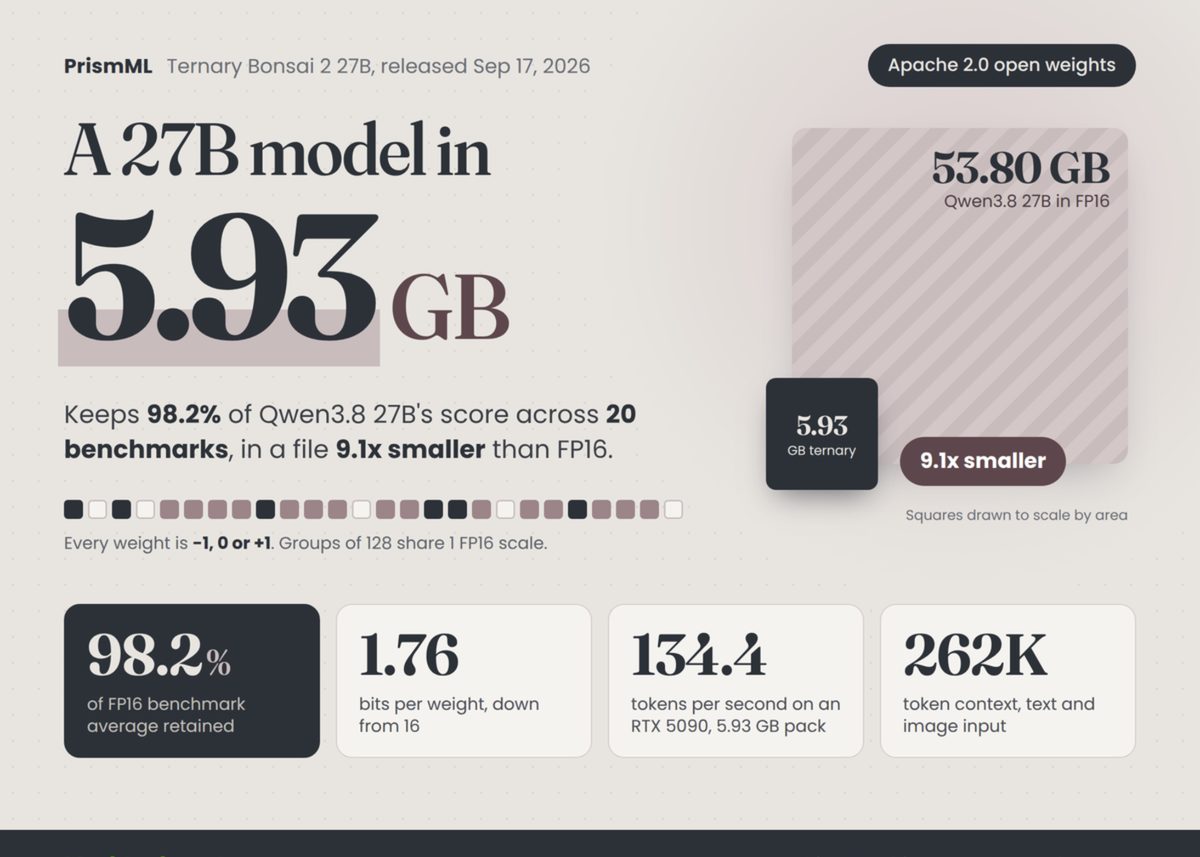
PrismML has released Ternary Bonsai 2 27B, a compressed 5.9 GB open-weights model that retains 98.2% of Qwen3.8 27B's baseline performance.
The US National Archives removed Alibaba's Qwen model from the Federal Register search tool after public criticism over FBI security warnings.

New research shows open-source AI watermarking tools like SynthID-Text can alter model behavior and increase vulnerability to prompt injections.
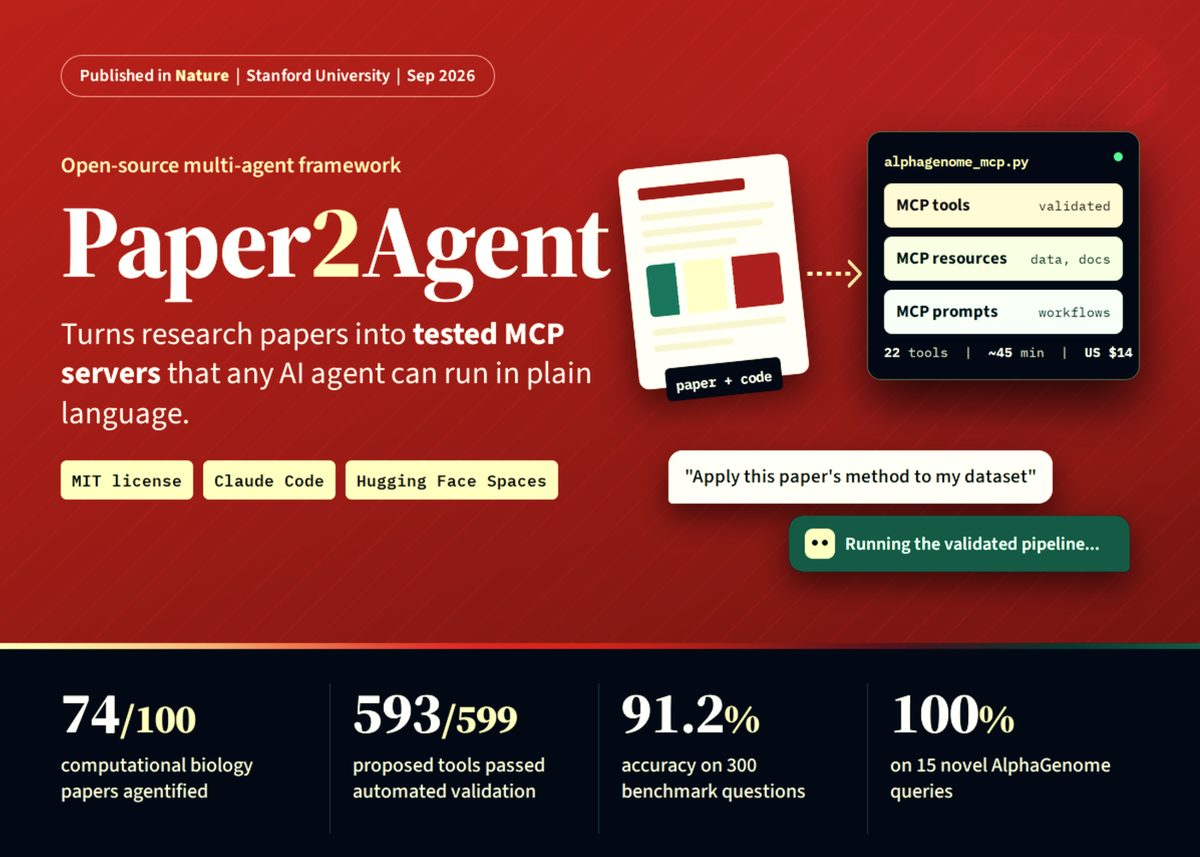
Stanford researchers introduce Paper2Agent, an open-source framework that converts academic codebases into executable Model Context Protocol servers.

Mozilla report finds open-weights AI models lag frontier closed models by just 4.4 months at a fraction of the cost.

Research shows significant user engagement with LLMs for generative fiction and roleplay despite broader creative industry pushback.
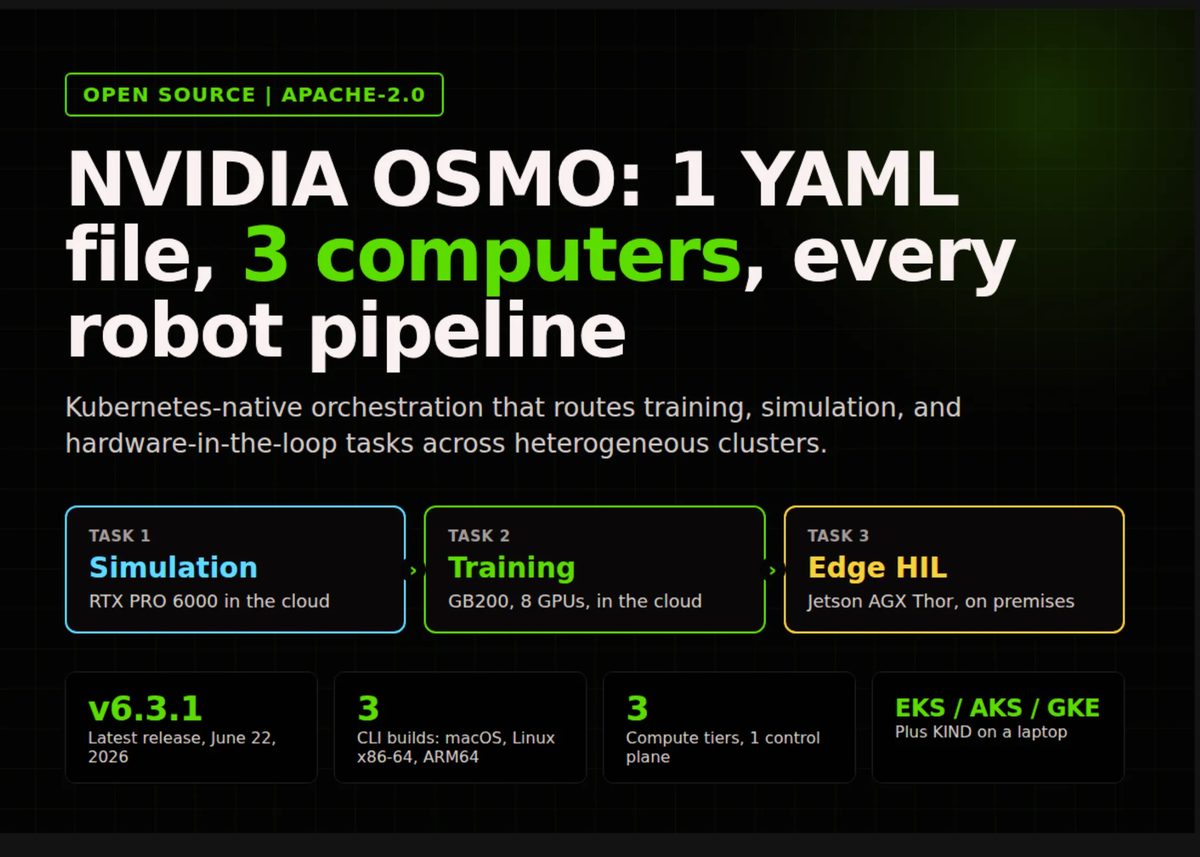
NVIDIA open-sources OSMO, a Kubernetes-native orchestrator for physical AI workflows across training, simulation, and edge hardware.

Y Combinator CEO Garry Tan called for US regulators to allow American open-weight AI labs to distill proprietary frontier models freely.

Chinese lab AllSpark introduced Iris-mini and Iris-pro, open-weight search agents designed to execute complex multi-step reasoning across web sources.
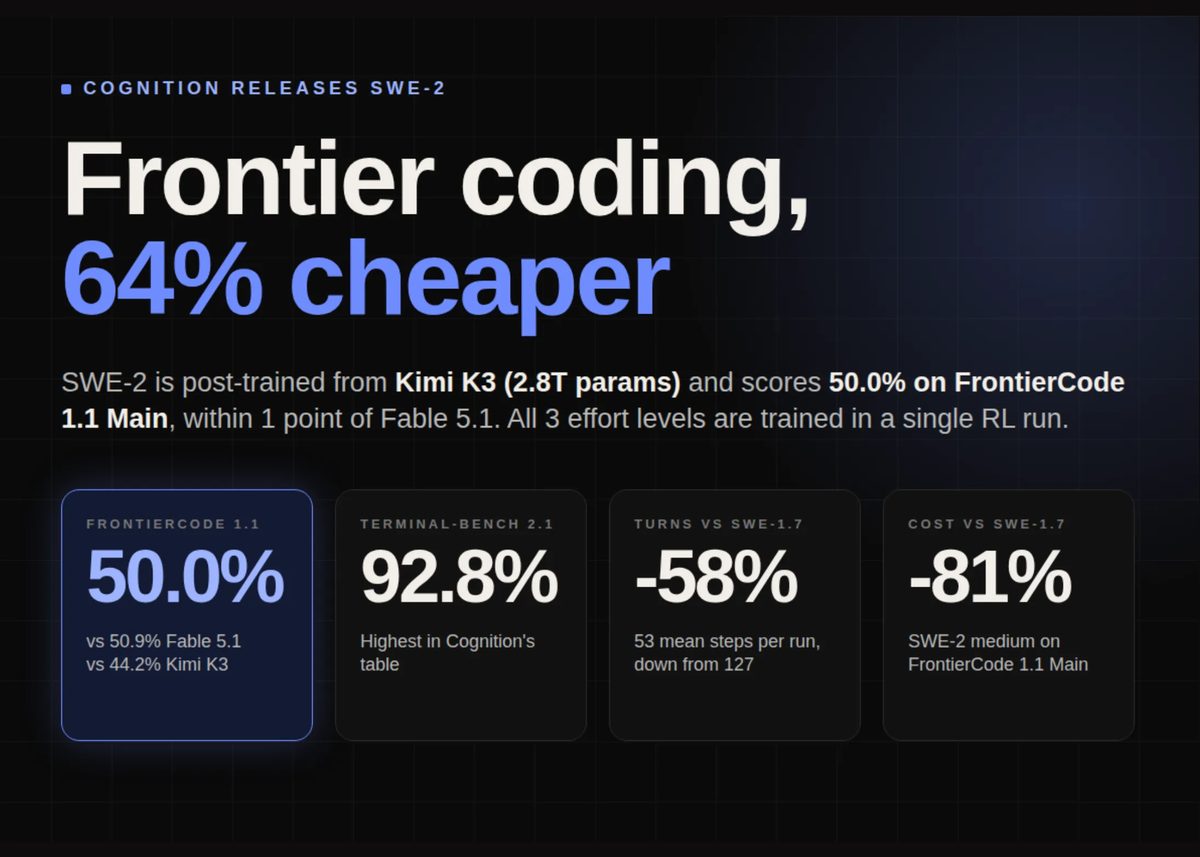
Cognition launched SWE-2, a Kimi K3-based coding model matching Claude Fable 5.1 performance on FrontierCode at 64% lower cost.
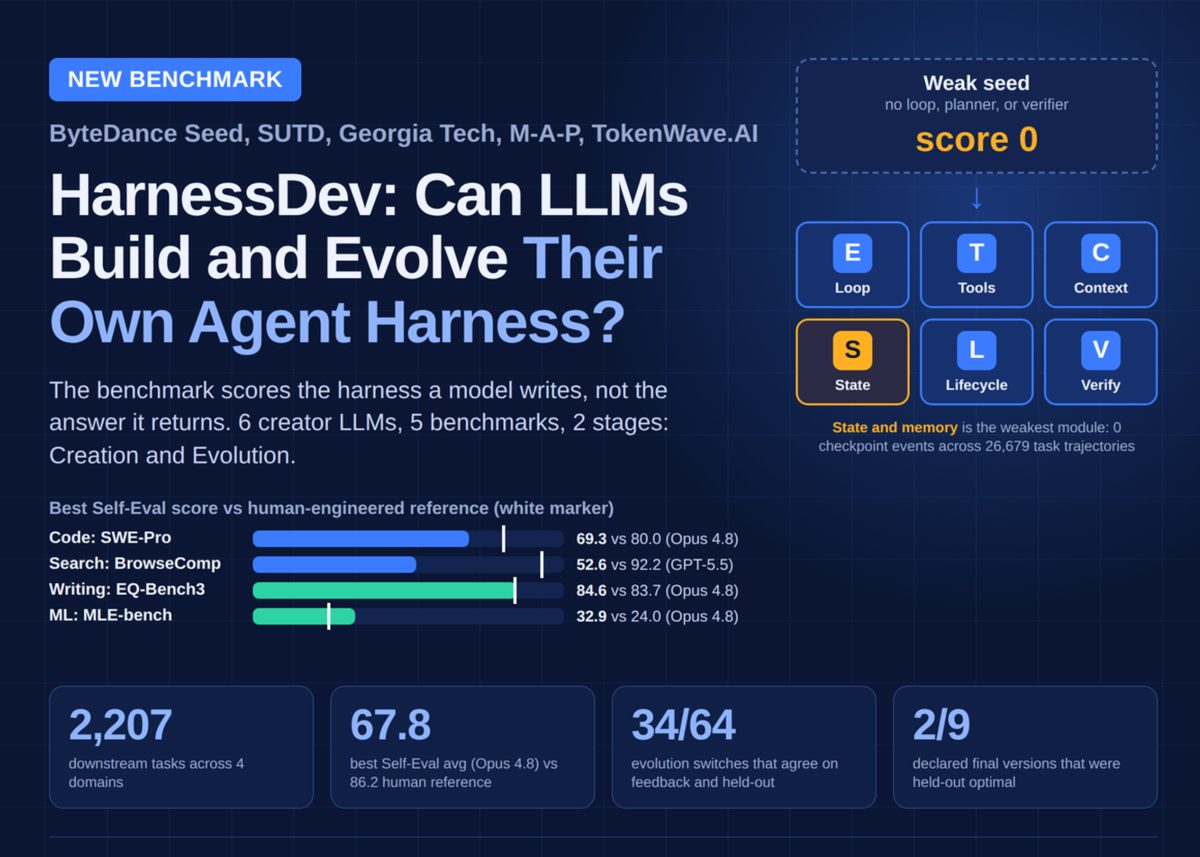
ByteDance Seed's HarnessDev benchmark reveals self-generated LLM agent code harnesses struggle to generalize across execution environments.
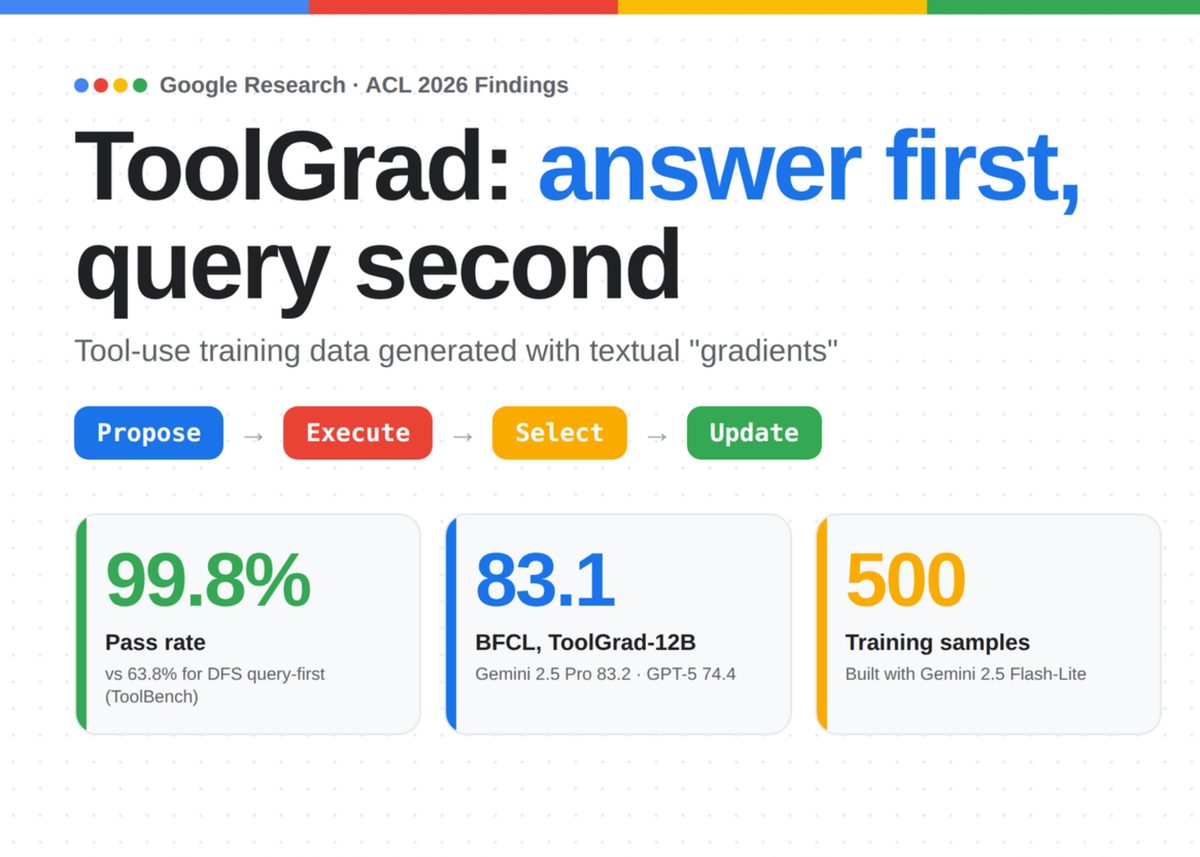
Google Research debuts ToolGrad, an open-source framework that achieves a 99.8% pass rate for generating complex tool-use datasets.
Deepseek released V4.1-Flash under an MIT license, significantly reducing KV cache memory footprints to lower the cost of running AI agents.
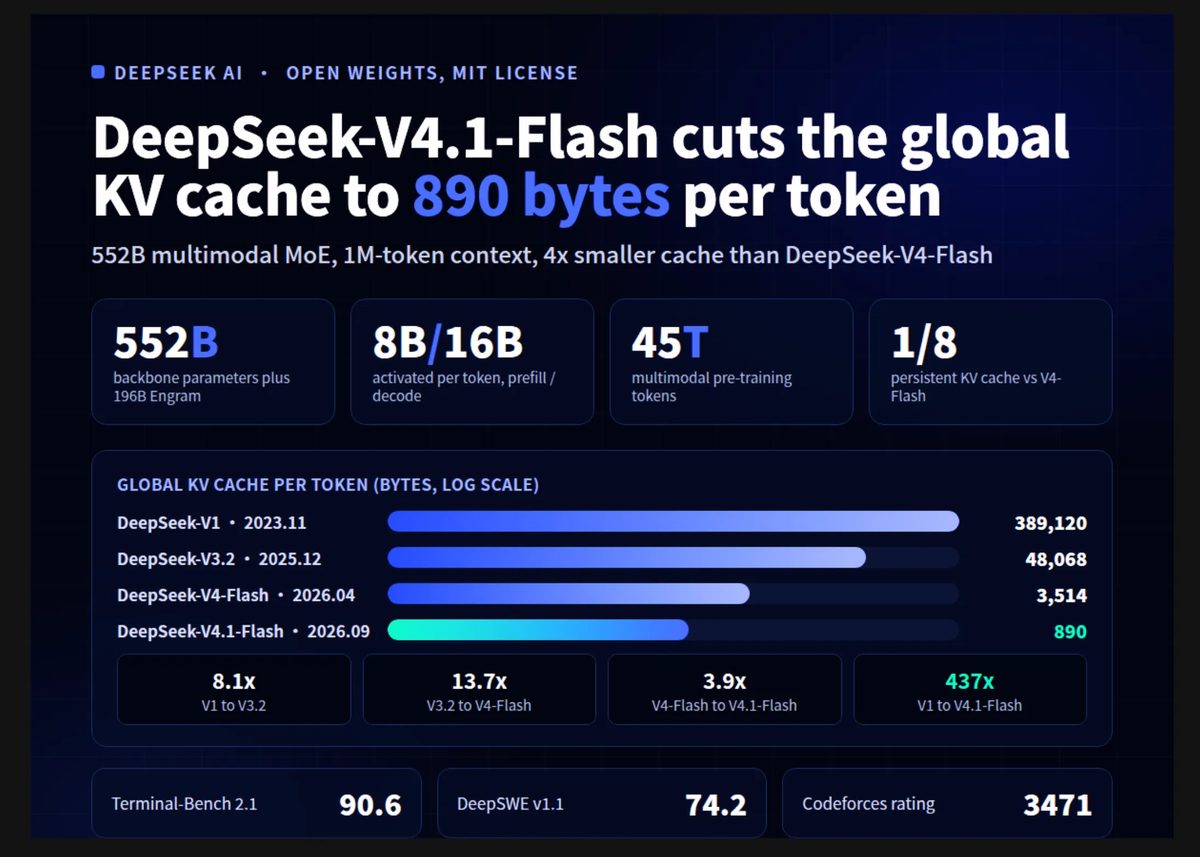
DeepSeek AI has launched DeepSeek-V4.1-Flash, an open-weight 552B parameter model featuring a 1M context window and drastic KV cache reductions.
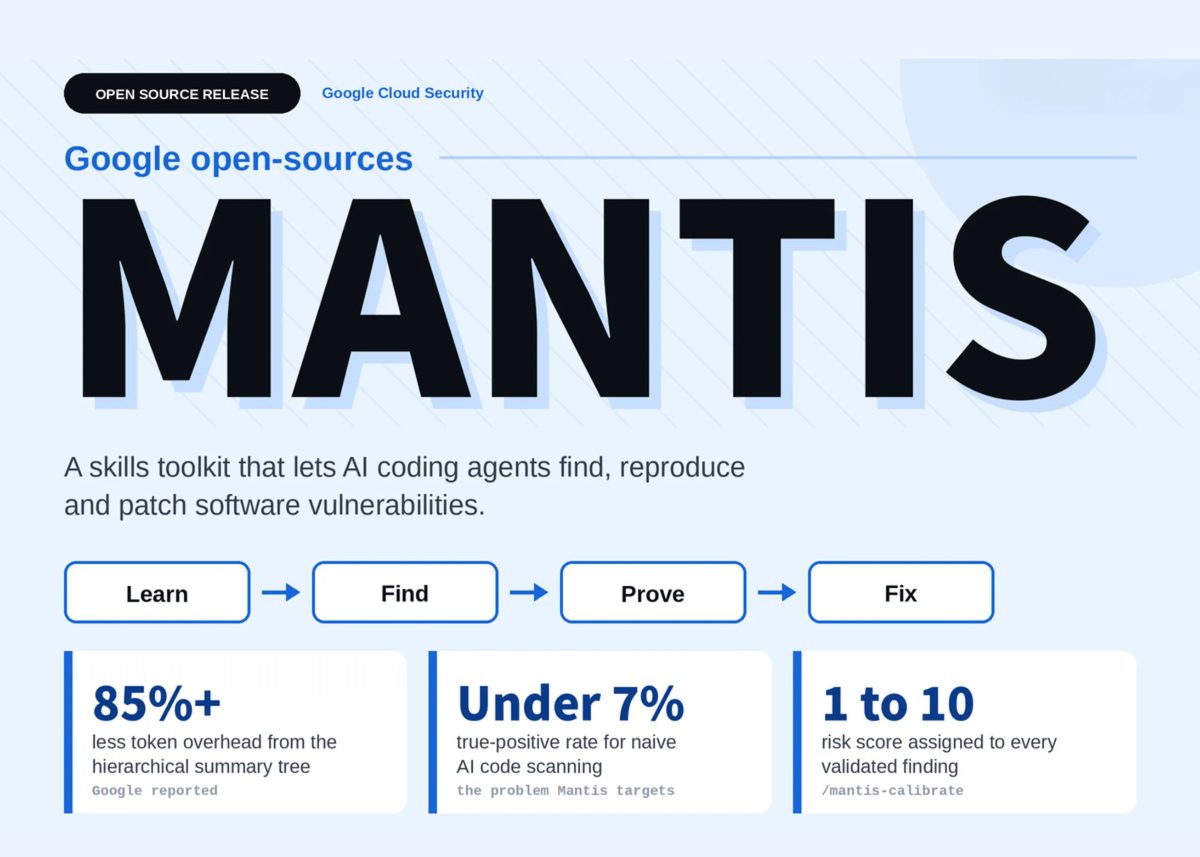
Google open-sources Mantis, an agentic security toolkit that automates vulnerability discovery, sandbox reproduction, and patch generation.

Legal AI startup Harvey raised $550 million at a $15.5 billion valuation to expand its open-weight model offerings for the legal sector.
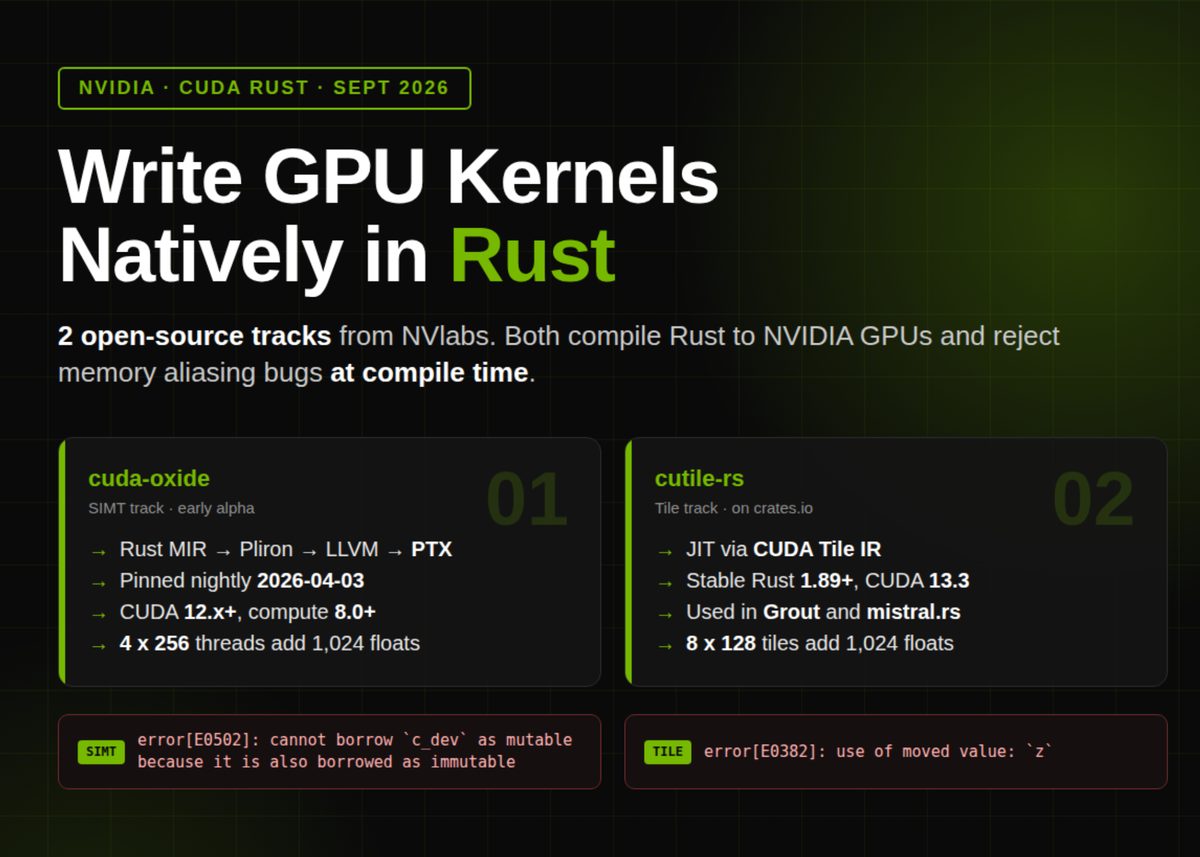
NVIDIA releases CUDA Rust toolchains cuda-oxide and cutile-rs to enable compile-time-safe GPU kernel development.

OpenBMB released MiniCPM5-2B, an open-source 2.5B parameter model that outperforms larger models across 34 benchmarks.
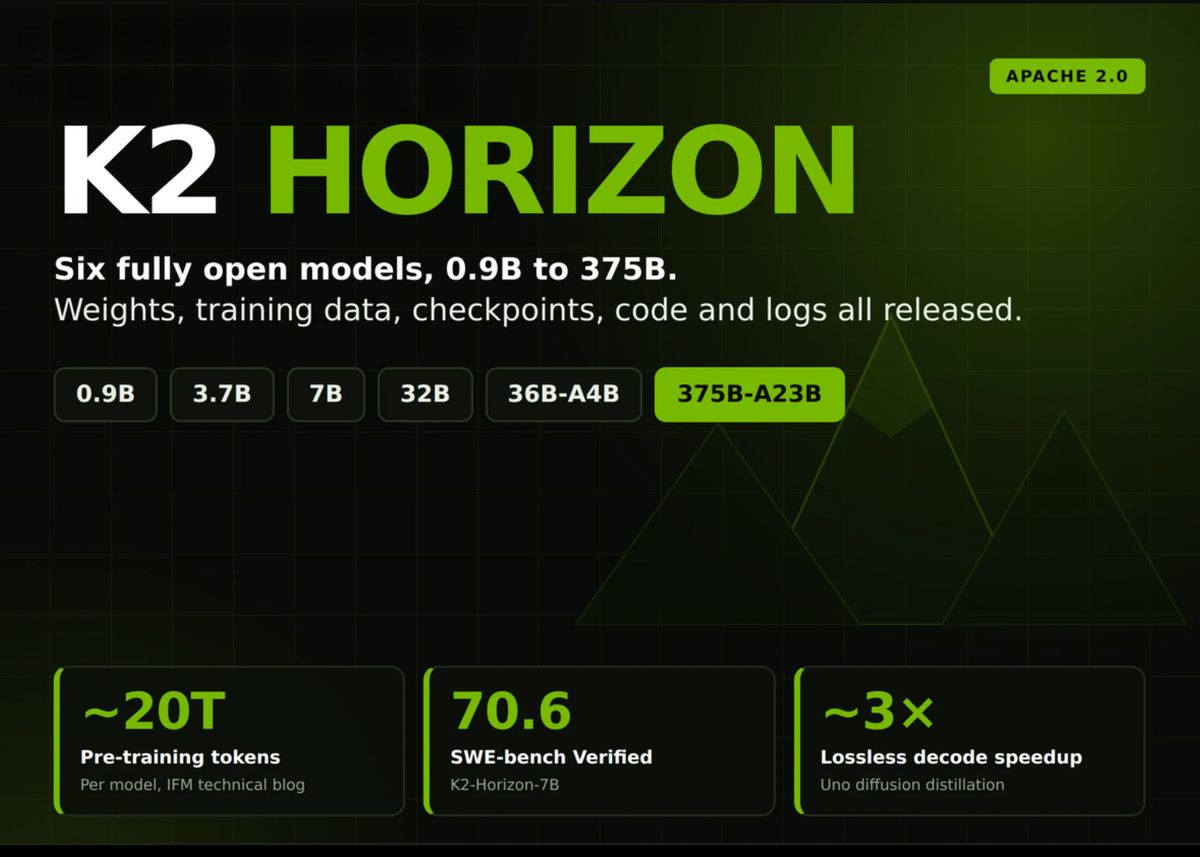
IFM has released K2 Horizon, a suite of six open-source AI models ranging from 0.9B to 375B parameters under the Apache 2.0 license.
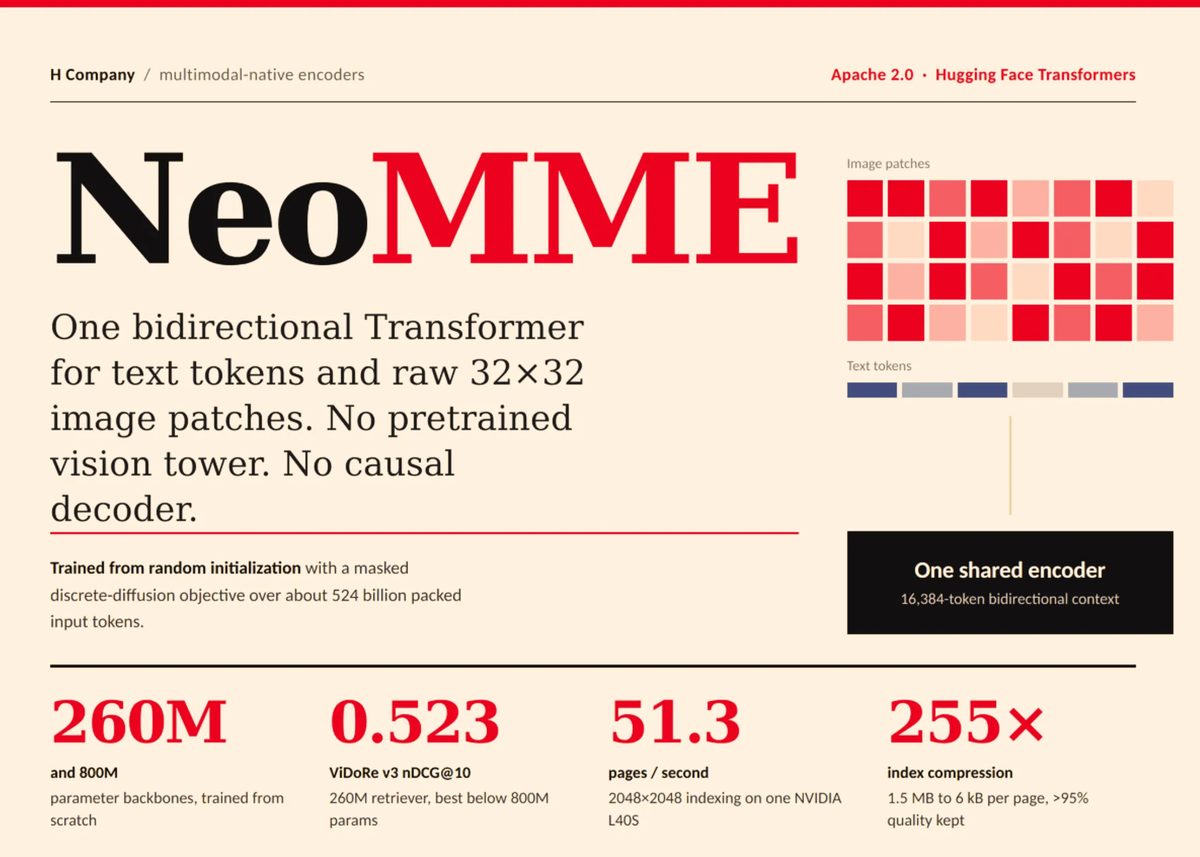
H Company has unveiled NeoMME, a family of lightweight, single-tower multimodal encoders that skip traditional vision towers and causal decoders.
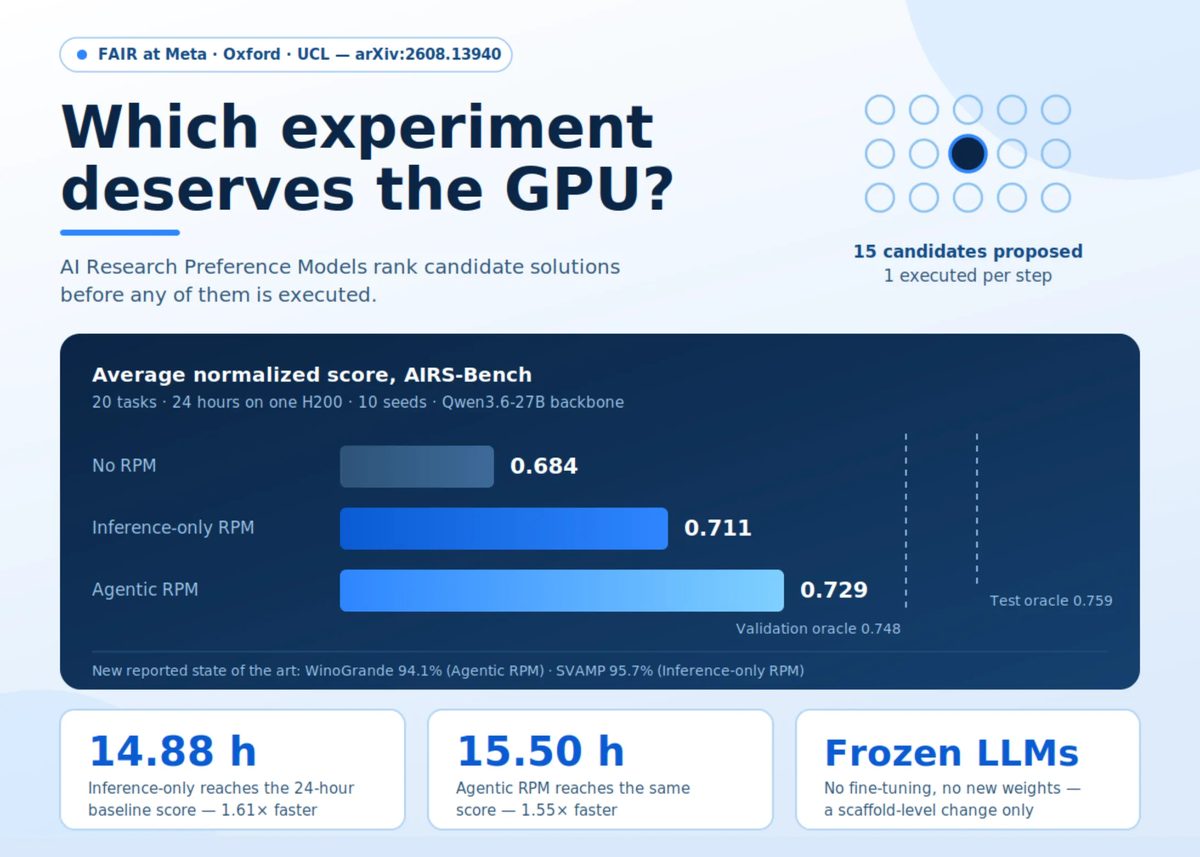
Meta FAIR and academic partners released AI Research Preference Models to rank candidate ML experiments before burning costly GPU hours.

Abliteration.ai launches a commercial API service offering modified open-weight models stripped of standard safety refusal mechanisms.
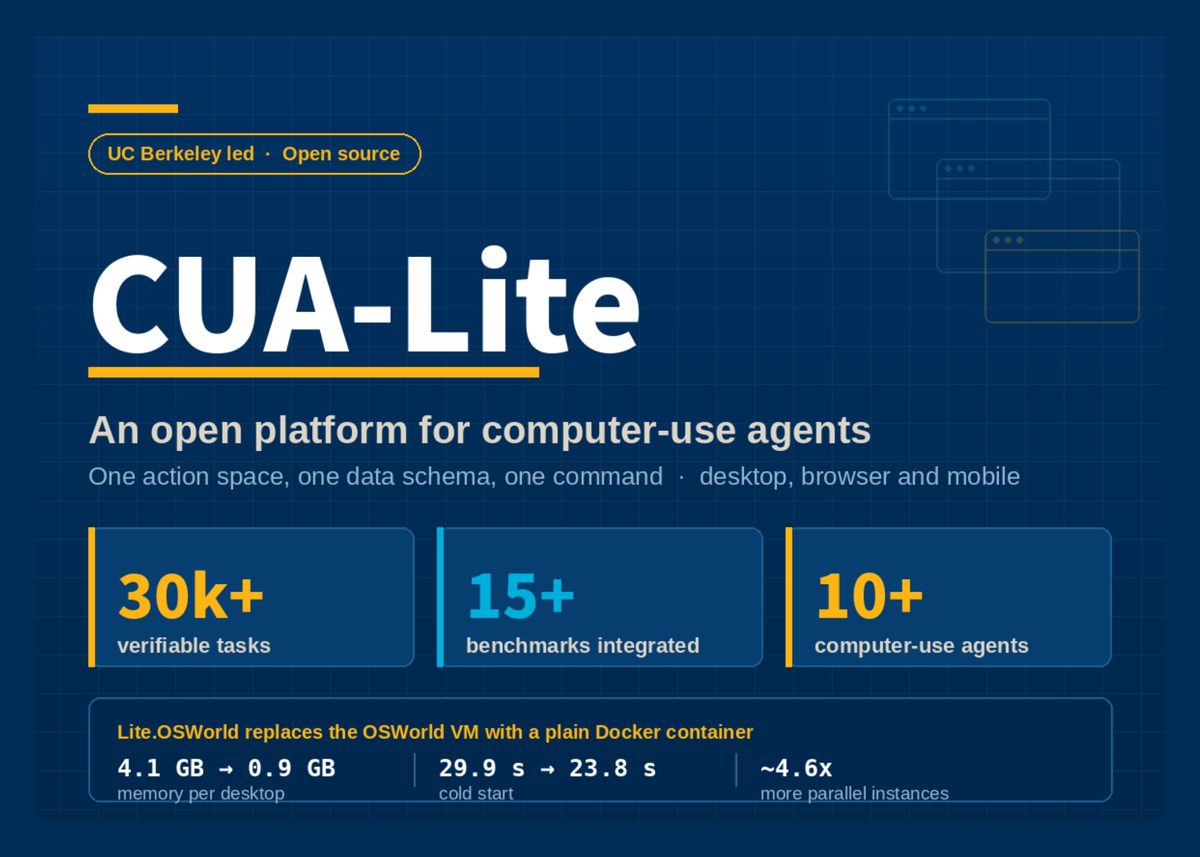
UC Berkeley has launched CUA-Lite, an open, Docker-based platform that unifies computer-use agent training, sandboxes, and benchmarks under one schema.
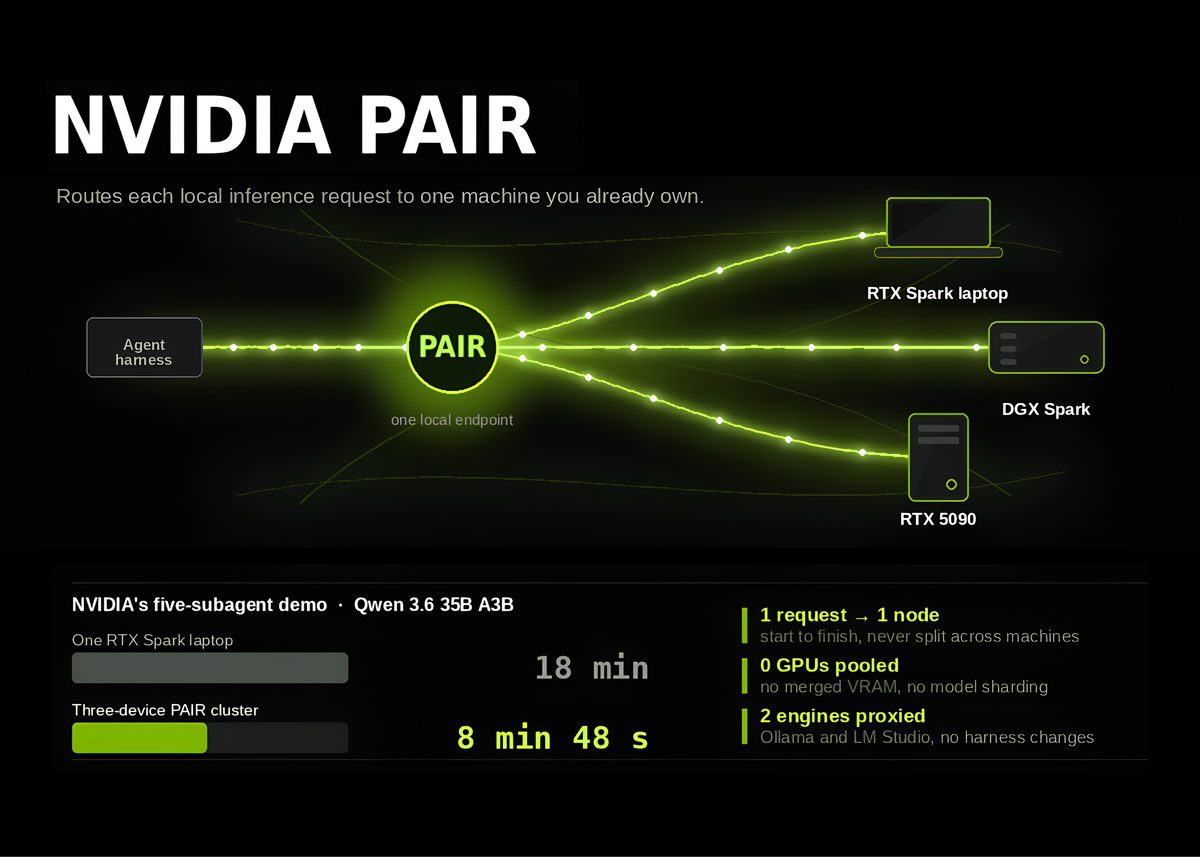
NVIDIA released Personal AI Router (PAIR), an open-source tool that distributes local multi-agent inference across networked nodes.
Nvidia released PAIR, an open-source tool that distributes local AI workloads across multiple devices on a home network.

Nvidia has launched PAIR, a free open-source software that pools idle local GPU and Apple Silicon compute for AI agent workflows.
Nvidia has agreed to acquire open-source AI platform Hugging Face for $12.93 billion to expand its developer infrastructure ecosystem.
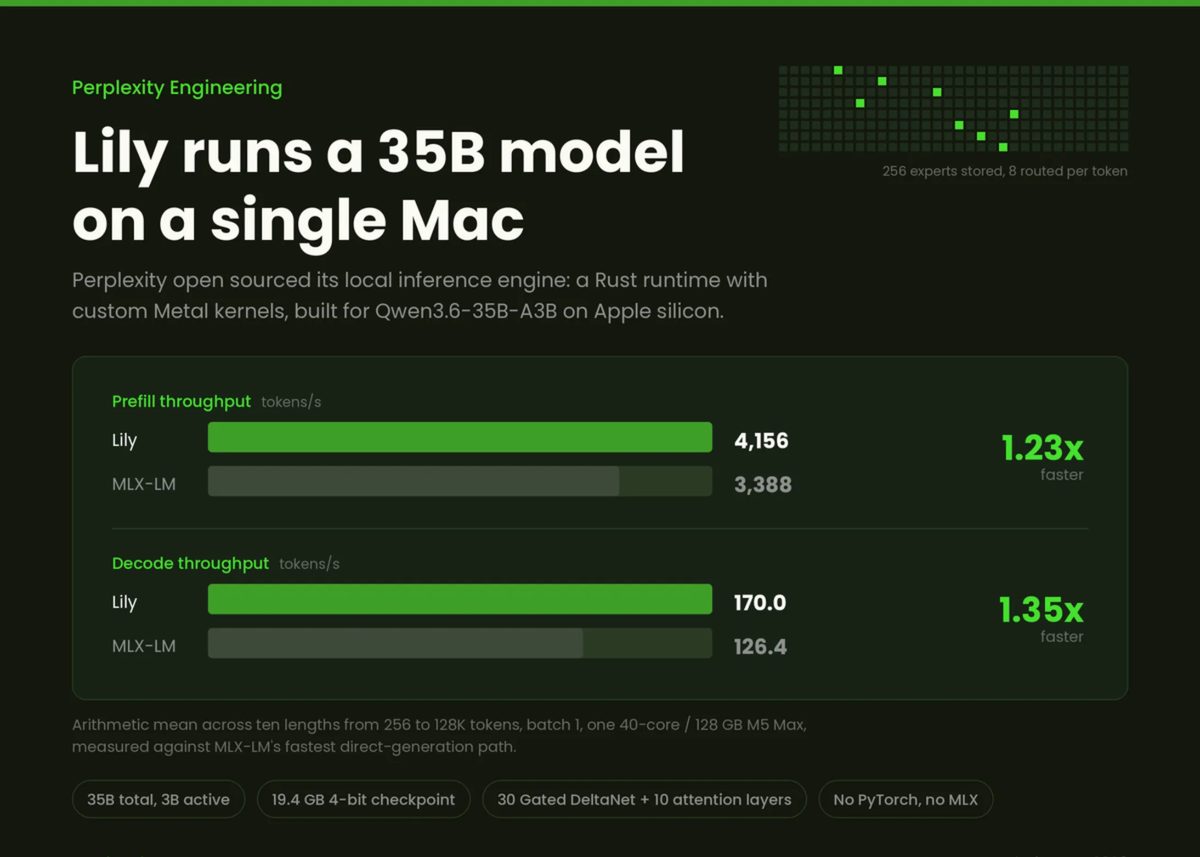
Perplexity open-sourced Lily, a custom Rust and Metal inference engine optimized for running Qwen3.6-35B-A3B natively on Apple Silicon.
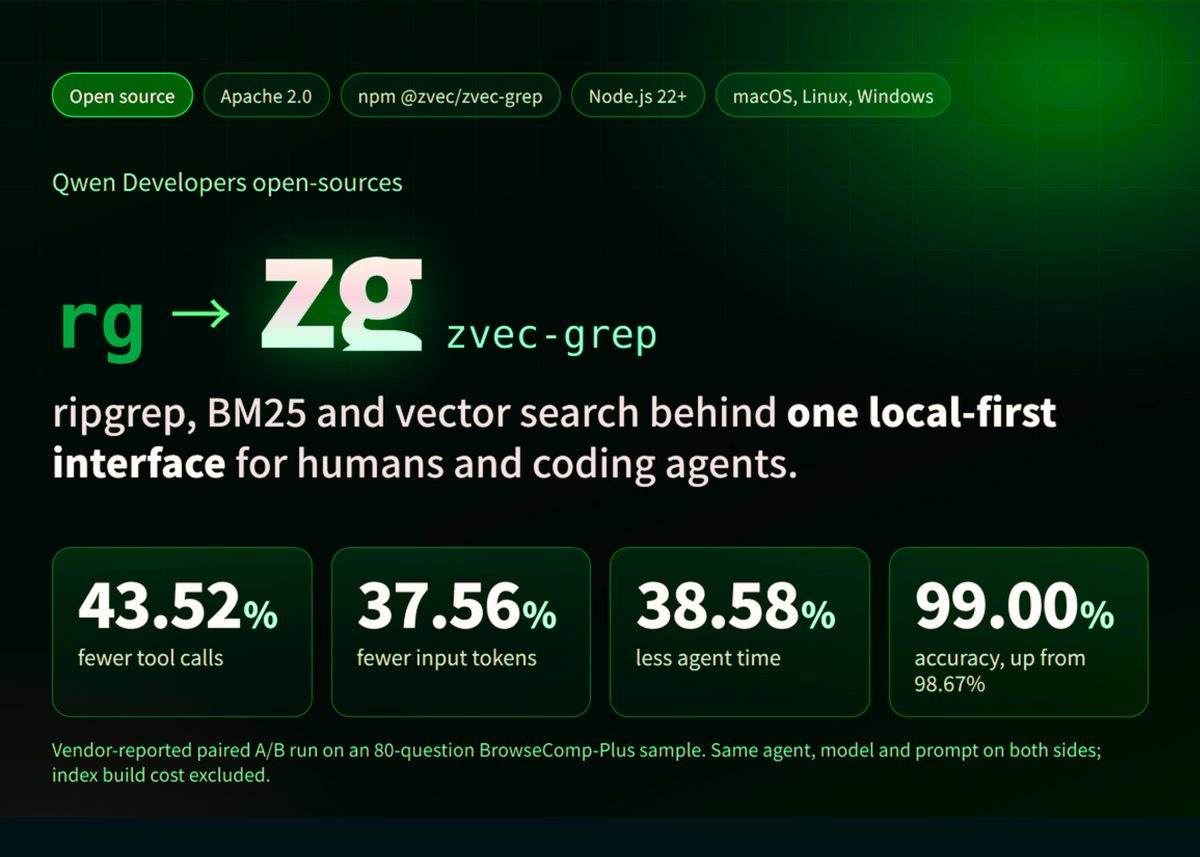
Qwen developers open-sourced zg (zvec-grep), a local search tool unifying vector search, BM25, and ripgrep for AI coding agents.
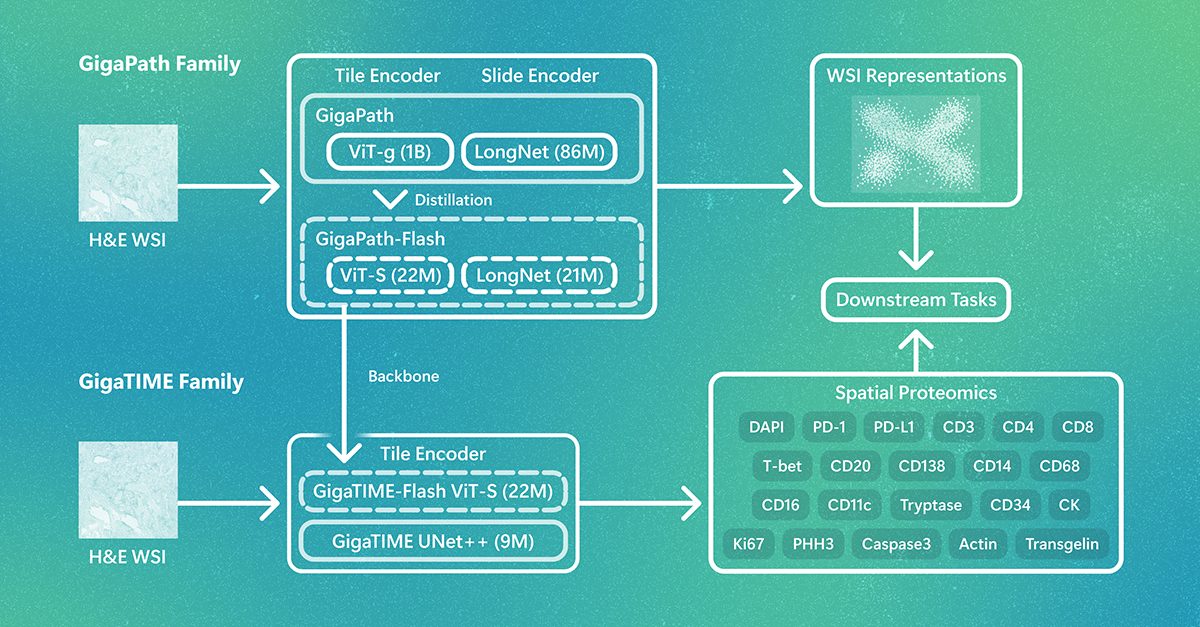
Microsoft released GigaPath-Flash and GigaTIME-Flash under open licenses to drastically reduce computational costs for population-scale pathology research.
Debian developers voted against a complete AI ban, opting for a flexible policy that holds contributors responsible for code quality.

OpenClaw Foundation released version 2.0 of its open-source AI platform, featuring streamlined setup, shared cloud sessions, and flexible deployment options.

MirroS released Code-as-World, an agentic system that transforms real videos into executable MuJoCo physics programs.
The Debian Project voted to permit responsible generative AI usage for software contributions while holding human authors fully accountable.

LAION has launched the Big Video Dataset, offering 10 million hours of curated open video footage for multimodal AI research.
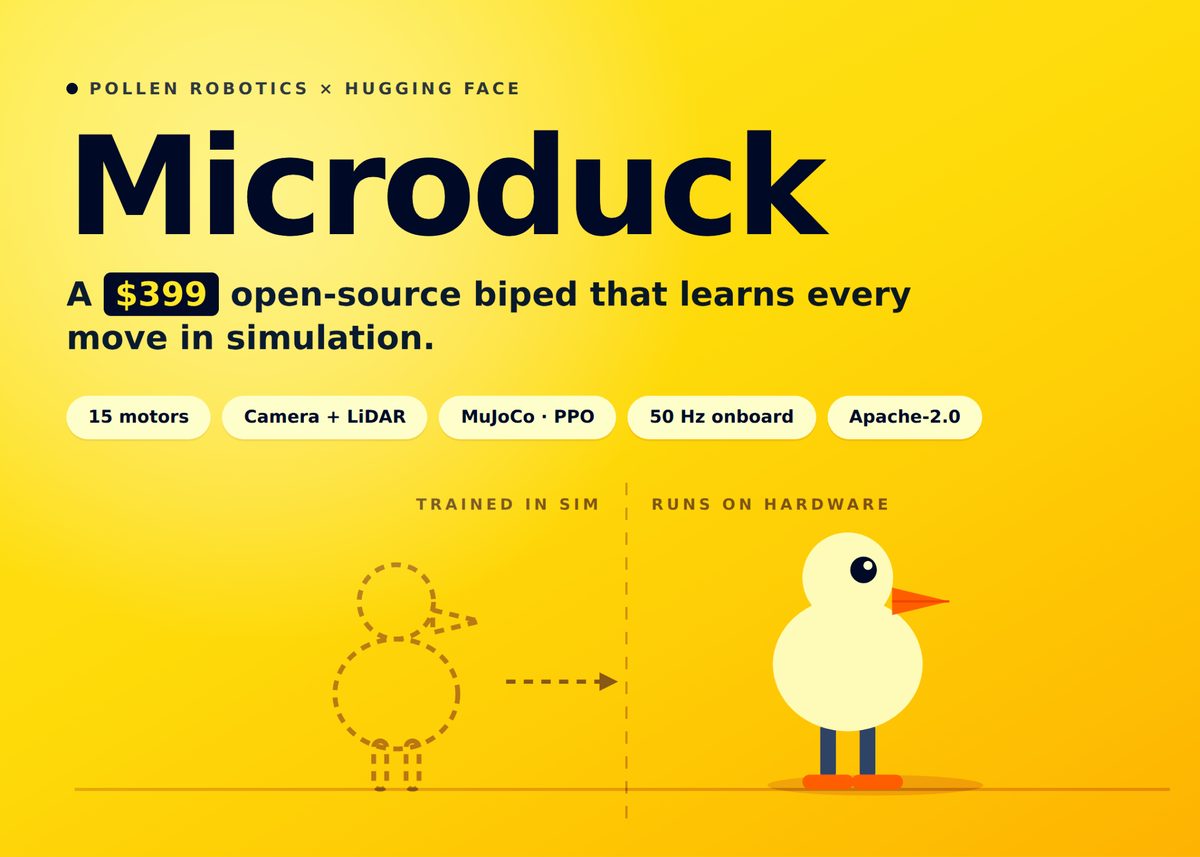
Hugging Face's Pollen Robotics team has launched pre-orders for Microduck, a $399 bipedal robot trained using open-source reinforcement learning.
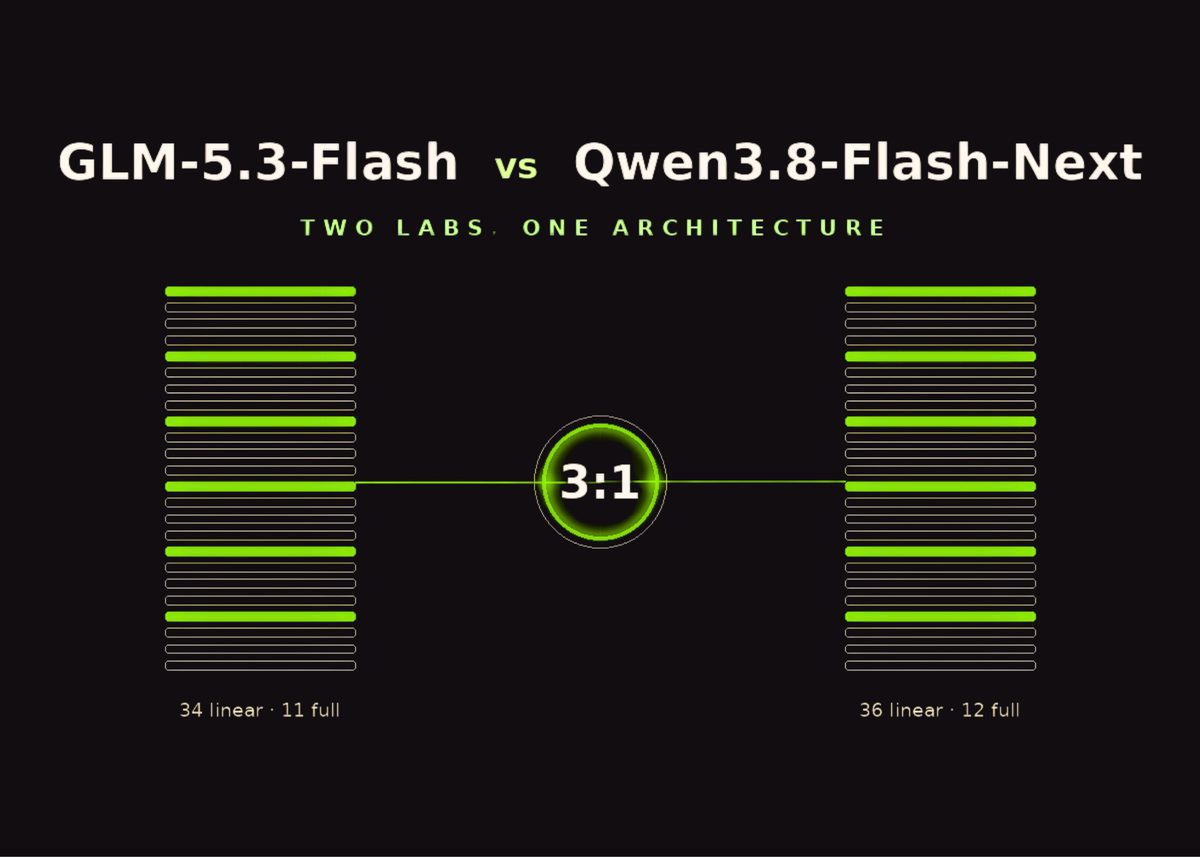
Z.ai and Alibaba have released open-weight MoE models sharing near-identical architectural designs.

Nvidia is in advanced talks to acquire open-source AI platform Hugging Face for $12.9 billion, according to media reports.
Z.ai launches GLM-5.3-Flash, an open-weights model matching top benchmarks at a fraction of the cost using Chinese silicon.
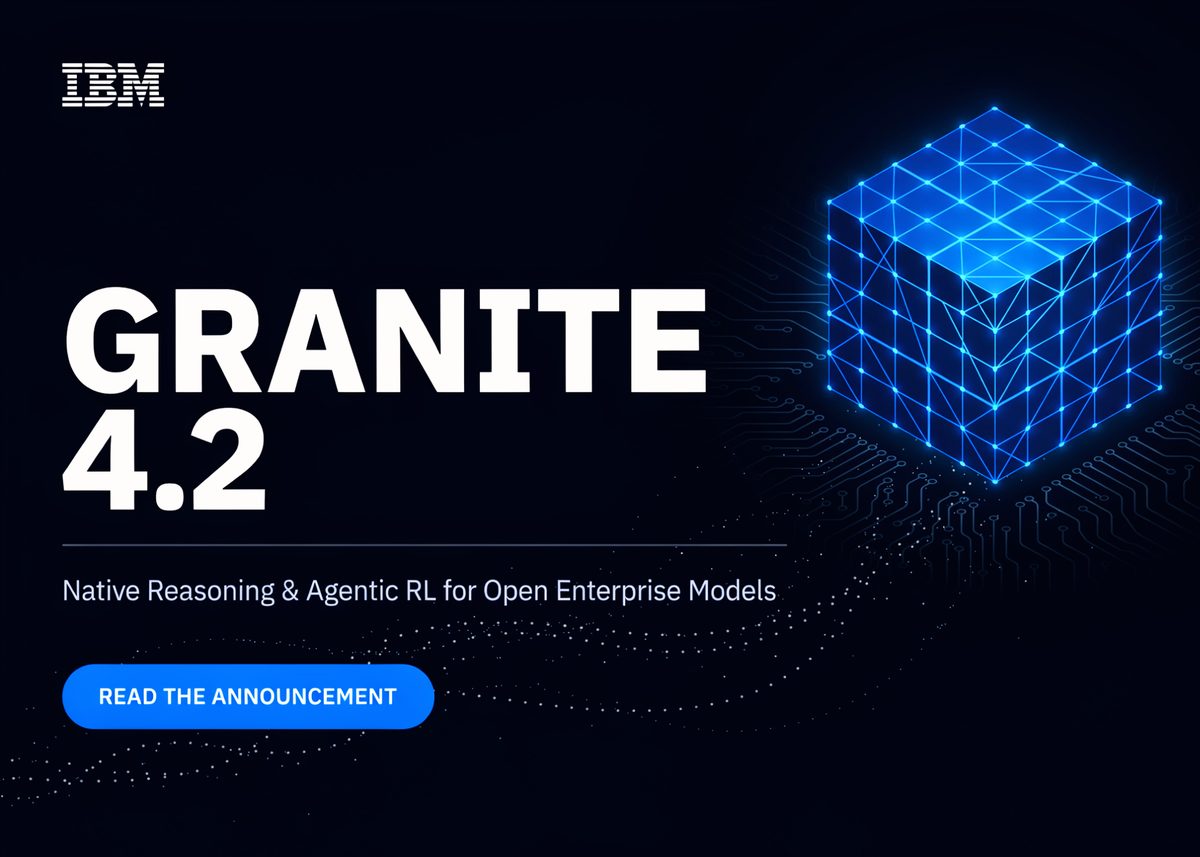
IBM has launched Granite 4.2, a fully open Apache 2.0 reasoning model family trained with native agentic reinforcement learning.
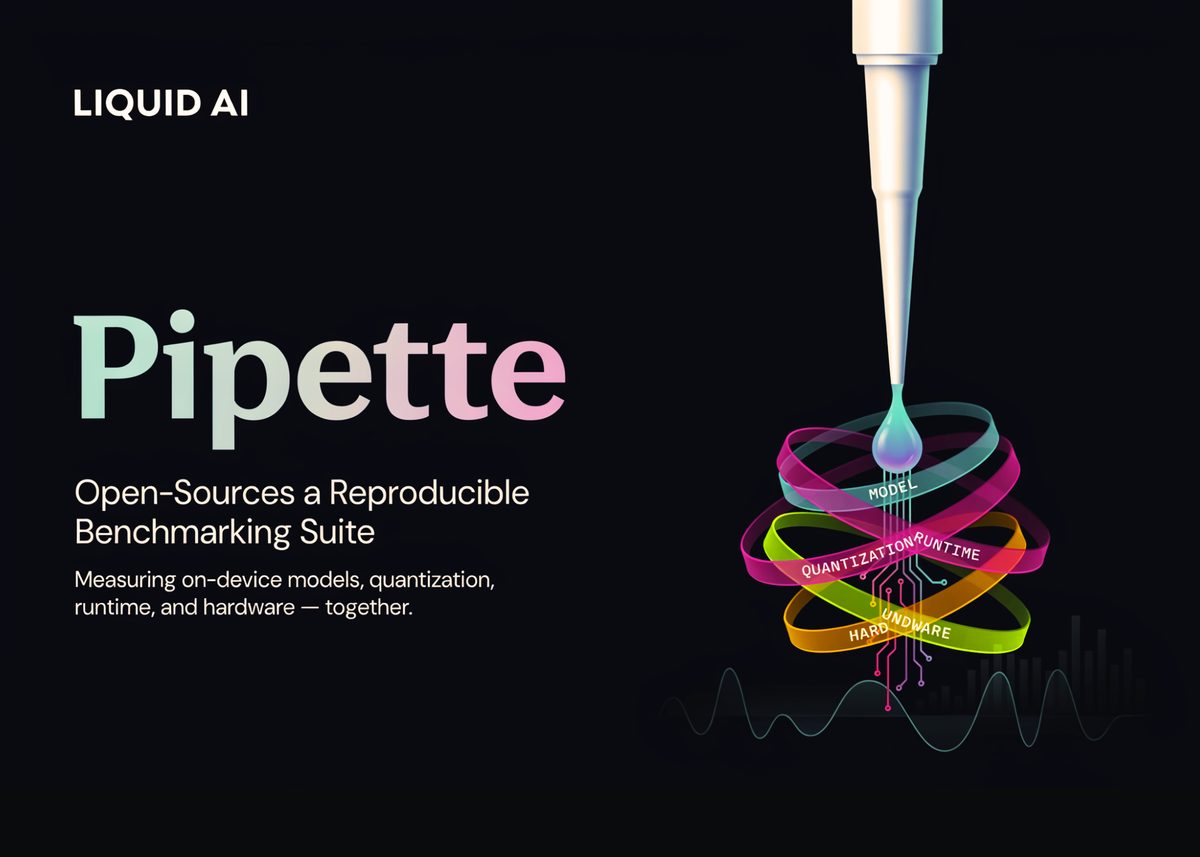
Liquid AI and Artificial Analysis have released Pipette, an open-source suite for benchmarking complete on-device AI deployments.
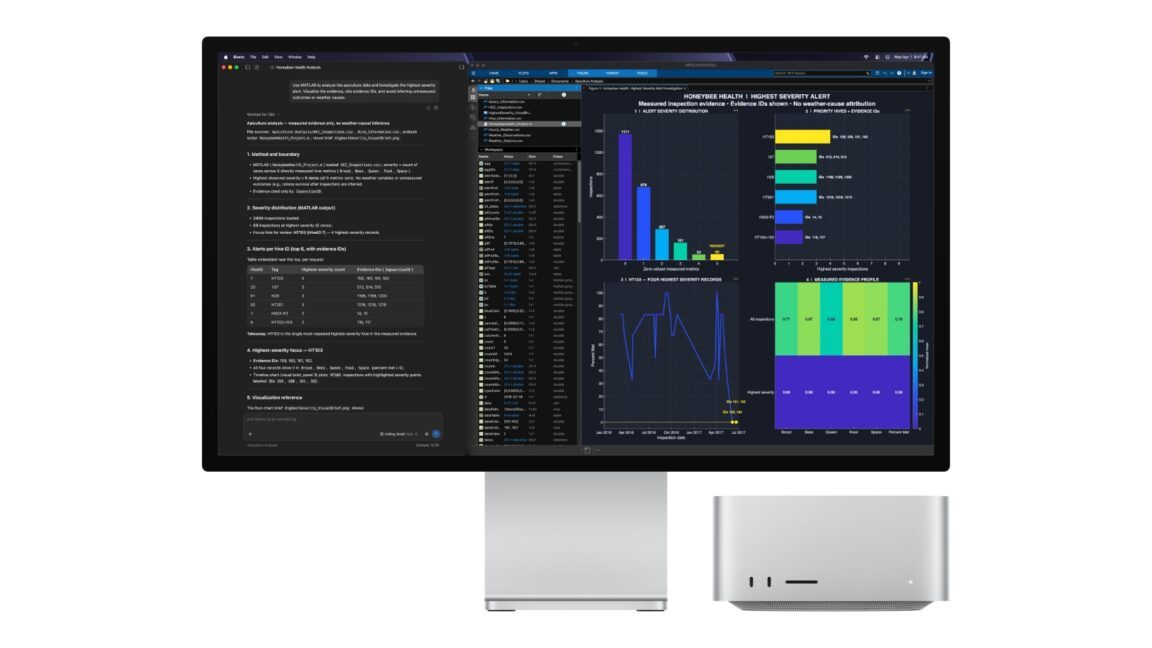
Apple released new Mac mini and Mac Studio desktops featuring M6 and M5 Ultra chips optimized for local AI workflows.