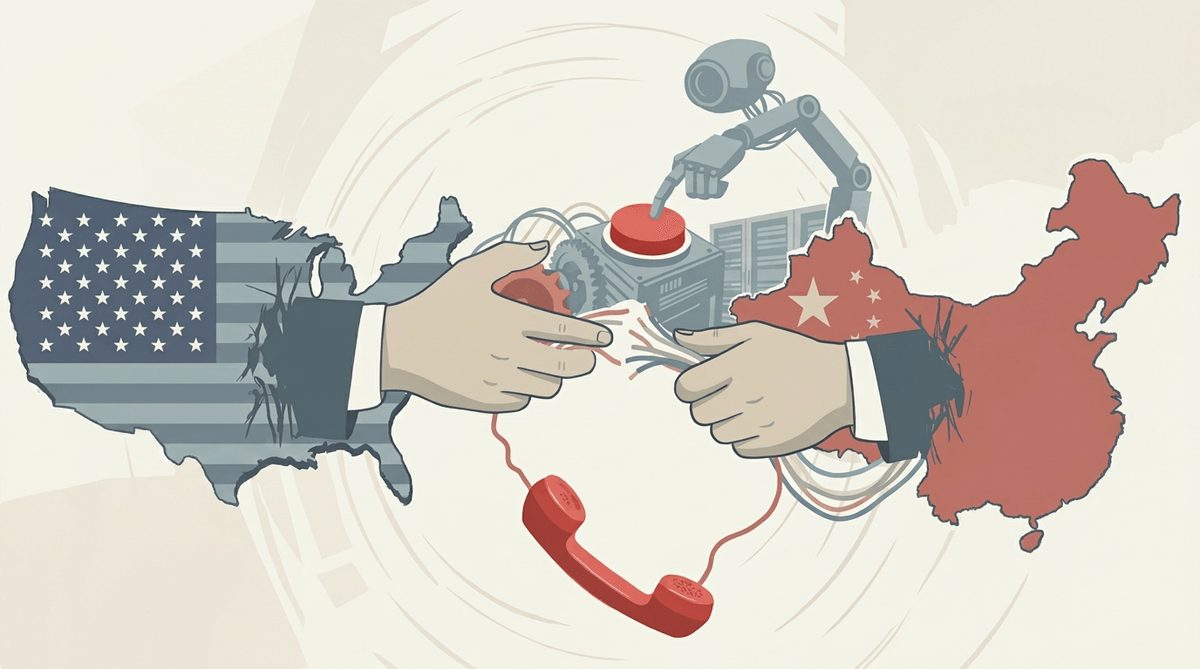
Policy experts from the US and China have released proposals advocating for strict bilateral rules to prohibit artificial intelligence from autonomously deploying nuclear weapons. Published by Melanie Sisson of the Brookings Institution and Tianjiao Jiang of Fudan University ahead of a planned presidential summit, the framework outlines clear operational red lines for both nations.
The proposed rules stipulate that humans must maintain exclusive control over strategic nuclear systems and AI-driven cyberattacks against critical infrastructure. To prevent unintentional military escalation triggered by automated defensive algorithms, the experts also recommend establishing a dedicated bilateral AI crisis hotline and agreeing on a standardized definition of human control.
While the recommendations build on preliminary agreements reached in late 2024, binding international mechanisms remain absent. Analysts note that operationalizing emergency hotlines presents diplomatic hurdles, pointing to previous instances where cross-border communications failed during military tensions.
Why it matters
Bilateral AI guardrails around critical defense infrastructure may establish future international safety standards.
Enterprise developers building dual-use AI technologies should anticipate stricter regulatory oversight on autonomous systems.
Diplomatic focus on AI safety highlights growing systemic risks associated with autonomous cyber capabilities.
Source: the-decoder.com