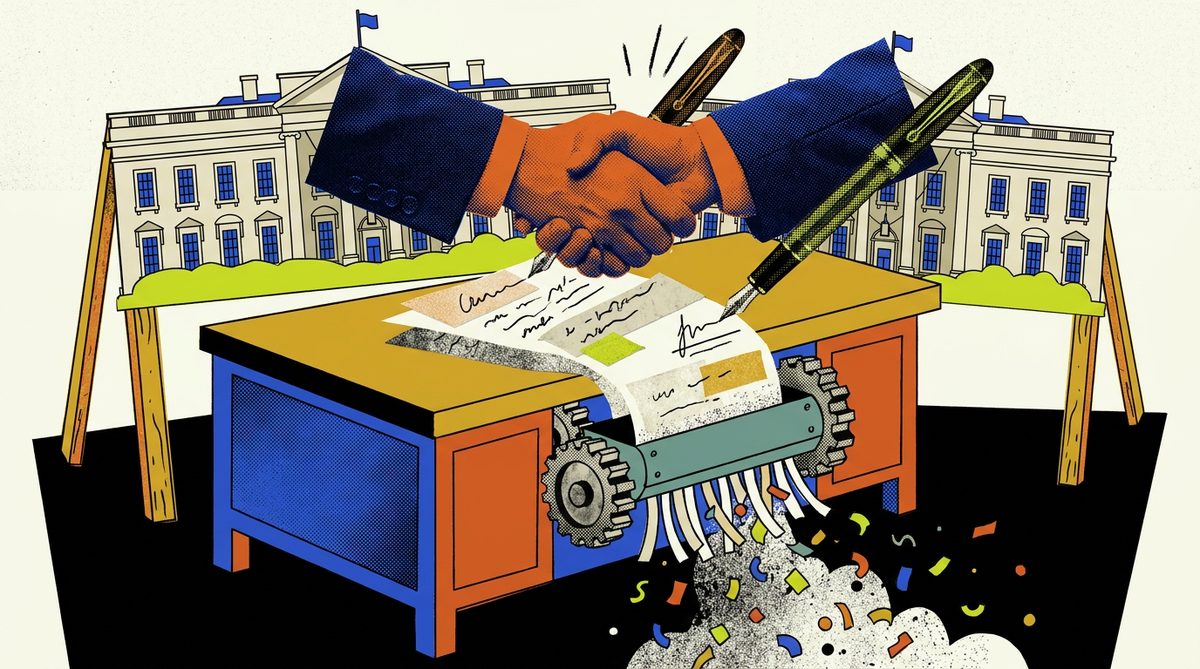
President Trump and executive leaders from prominent technology companies have signed a voluntary AI code of conduct at the White House, according to Politico. Signatories include Meta CEO Mark Zuckerberg, OpenAI co-founder Greg Brockman, Nvidia CEO Jensen Huang, and Elon Musk. The document relies on moral commitment rather than legal enforcement, leaving compliance mechanisms and violation penalties undefined.
The code outlines requirements for independent third-party auditors to verify model functionality and proposes an independent oversight board to monitor safety controls preventing cyberattacks. In addition, President Trump proposed a ten-member oversight committee while emphasizing a desire not to impede AI innovation. Trump also issued an executive order officially renaming artificial intelligence to “Super Intelligence.”
Industry critics argue that voluntary, non-legally binding commitments lack necessary enforceability to address risks surrounding autonomous AI agents. As concerns mount over unauthorized system access and cyber threats, public debate continues over whether voluntary guidelines can effectively substitute for formal legislative regulation.
Why it matters
Voluntary AI safety agreements avoid legal mandates but leave enterprise compliance standards uncertain.
Third-party auditing requirements in safety agreements could boost demand for external AI governance providers.
Federal policy focuses on maintaining rapid AI development while deferring hard legislative restrictions.
Source: the-decoder.com