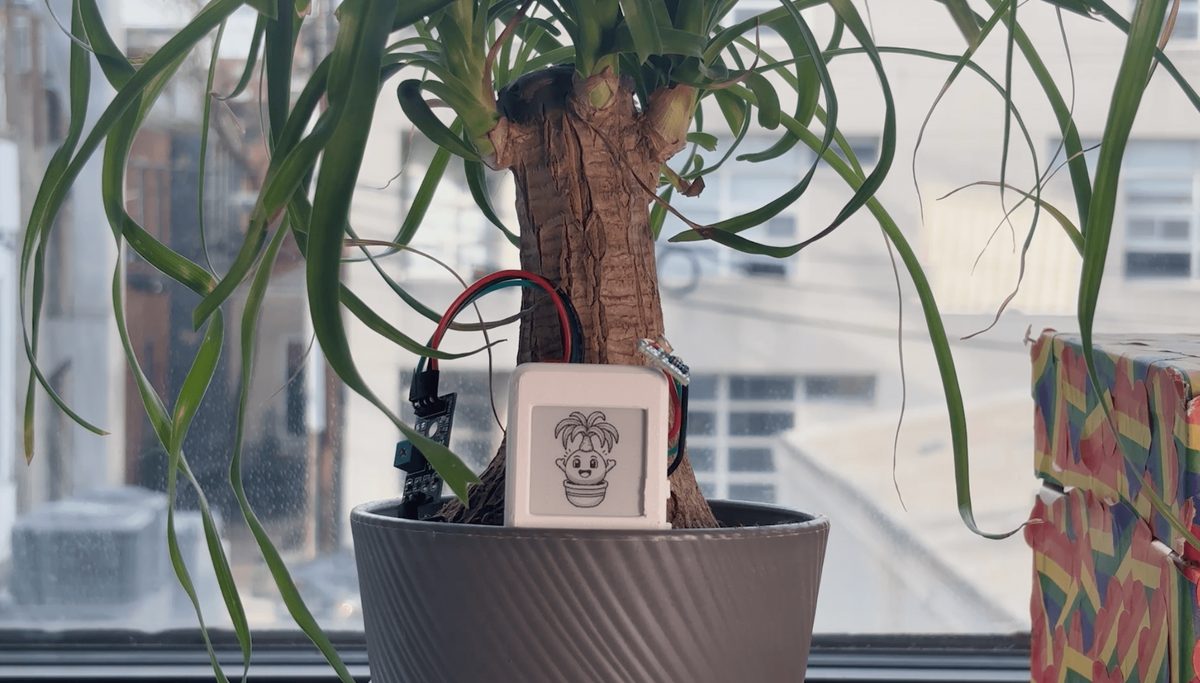
Daehwa Kim, a PhD student at Carnegie Mellon’s Future Interfaces Group, has developed Object Agent Twins (OATs)—micro-agent AI avatars mounted on tiny E Ink displays that attach to household objects. Presented at the ACM Symposium on User Interface Software and Technology, the project aims to bring the experience of digital pets to physical items, using emotional avatars to encourage real-world habits like watering plants or using a skateboard.
The hardware module costs approximately $20 to assemble and incorporates internal and external sensors that track moisture, temperature, humidity, light, motion, and sound. Using Google Gemini’s Nano Banana image generation via a web portal, the system automatically creates positive and negative emotional avatar states based on custom sensor triggers.
While OATs demonstrate a new direction for human-computer interaction beyond smartphone screens, the project remains a proof of concept. The current prototype relies on a lithium-ion polymer battery with a limited battery life of one to four days depending on sensor usage, and Kim has not yet committed to commercializing the device.
Why it matters
Offers hardware builders a lightweight blueprint for ambient, screenless human-computer interaction using localized sensor triggers.
Demonstrates low-cost edge deployment of generative image models to create dynamic user interface feedback.
Highlights persistent power constraint bottlenecks when integrating multi-sensor AI agents into tiny consumer hardware.
Source: wired.com