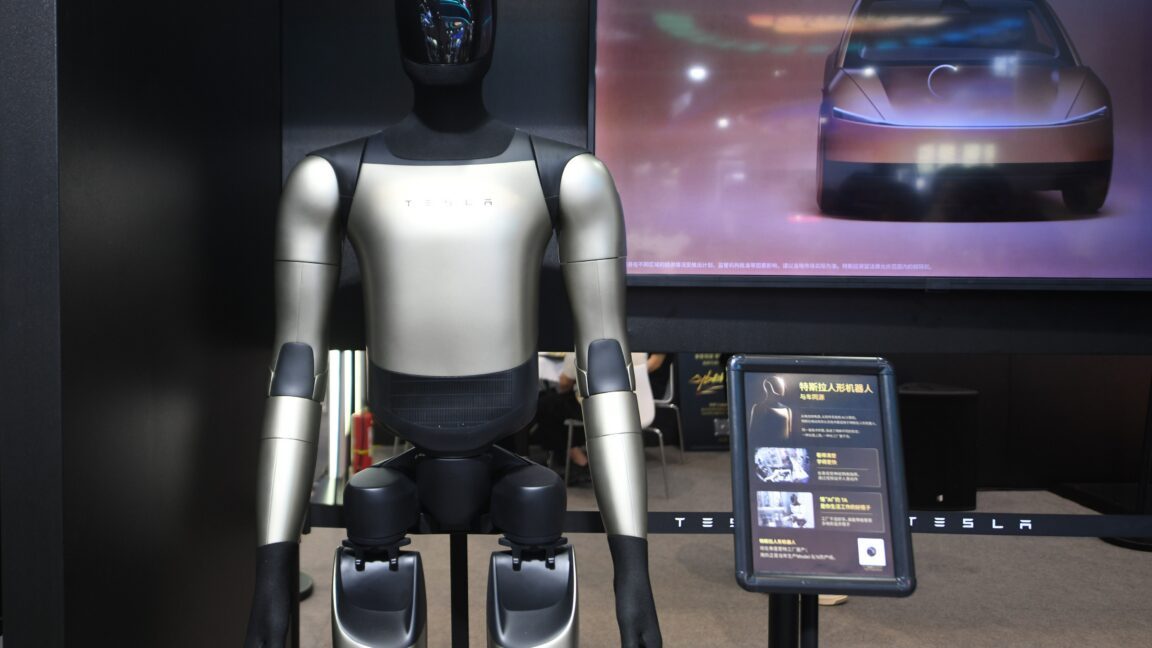
Tesla’s effort to scale manufacturing of its Optimus V3 humanoid robot is confronting technical assembly challenges and internal worker resistance, according to reporting by The Information. The automaker transitioned line workers and engineers at its Fremont facility away from legacy vehicles to focus on Optimus production, targeting over 1,000 units per week by the end of 2026.
Manufacturing complex robotic hands has proven to be a primary engineering hurdle, requiring manual assembly of over 100 small components per hand and forearm. Frequent component misalignments and delicate tactile sensor failures have forced Tesla to design modular replacement sensor covers and perform immediate manual repairs on newly built units.
Additionally, Tesla’s reliance on imitation learning has created friction with factory staff tasked with wearing motion-capture suits. Employees expressed reluctance to participate in collecting physical movement data, citing concerns that they are actively training the systems designed to automate their jobs.
Why it matters
Labor resistance to motion-capture data collection creates human operational friction during physical AI and robotics rollouts.
Dexterous hardware manufacturing complexity and sensor fragility remain major bottlenecks for scaling general-purpose humanoid robots.
Source: arstechnica.com