OpenAI’s Ted Sanders has provided breakdown guidelines for selecting among the company’s language models, focusing on the newly introduced GPT-6.1 Terra alongside Astra, Sol, and Luna. Sanders noted that evaluating AI capability requires measuring several distinct dimensions—such as raw model size, reasoning effort, and multi-agent system integration—making a single unified performance score impractical for developers.
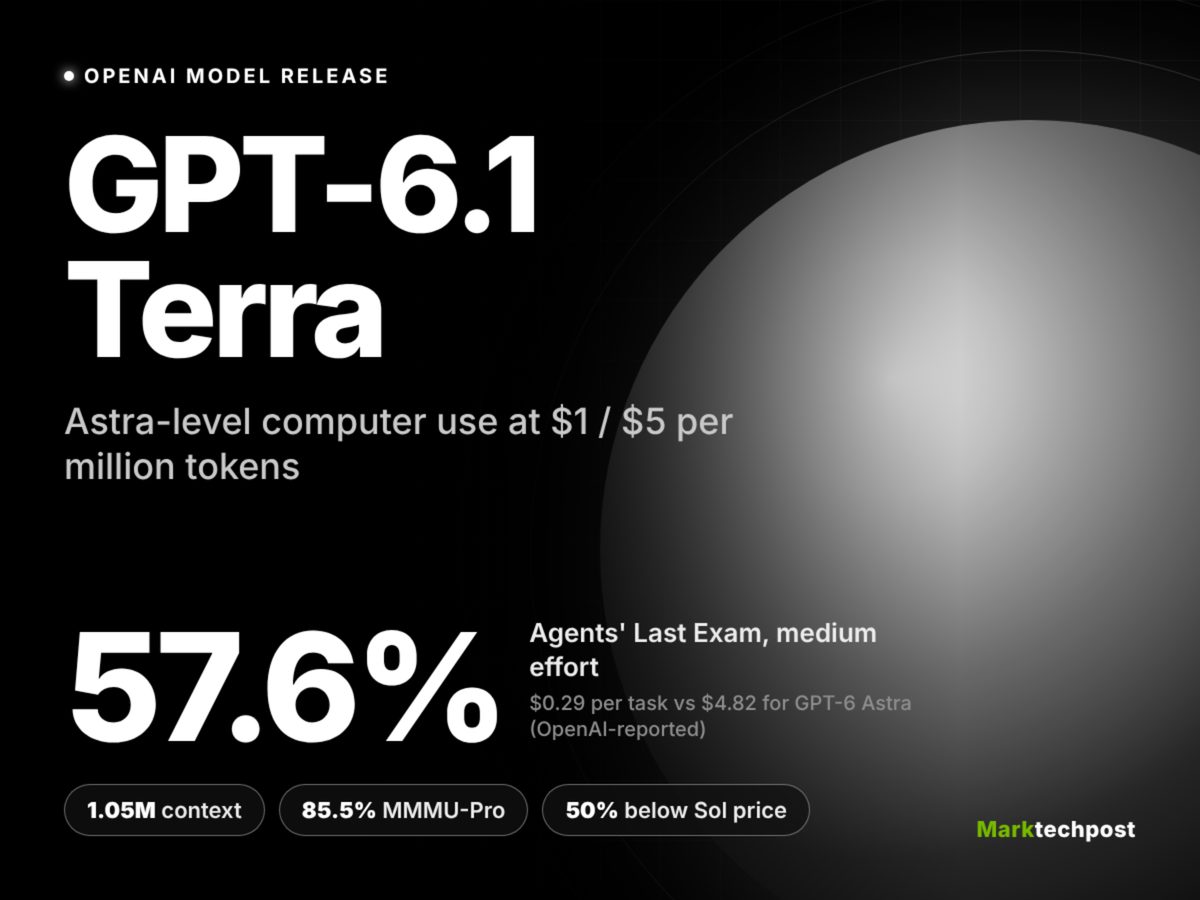
According to Sanders, model size remains the primary factor driving capability differences, though newer architectural improvements and better training data allow smaller models to periodically surpass older, larger options. GPT-6.1 Terra, for example, delivers technical communication capabilities superior to the larger Astra model while matching its computer use and image processing features at a lower operating cost.
Sanders recommended that organizations choose Astra when prioritizing absolute quality, opt for Sol when moderately price-sensitive, and deploy Terra or Luna for maximum cost efficiency. The guidance provides operators with a clearer framework for balancing inference budgets against domain-specific technical needs.
Why it matters
Provides operators with a clear framework to optimize inference costs based on specific task requirements rather than defaulting to top-tier models.
Highlights how smaller, newer architectures like GPT-6.1 Terra can match larger models in specific domains like computer use at lower prices.
Clarifies OpenAI’s multi-variable naming logic across size, reasoning effort, and multi-agent capabilities.
Source: the-decoder.com