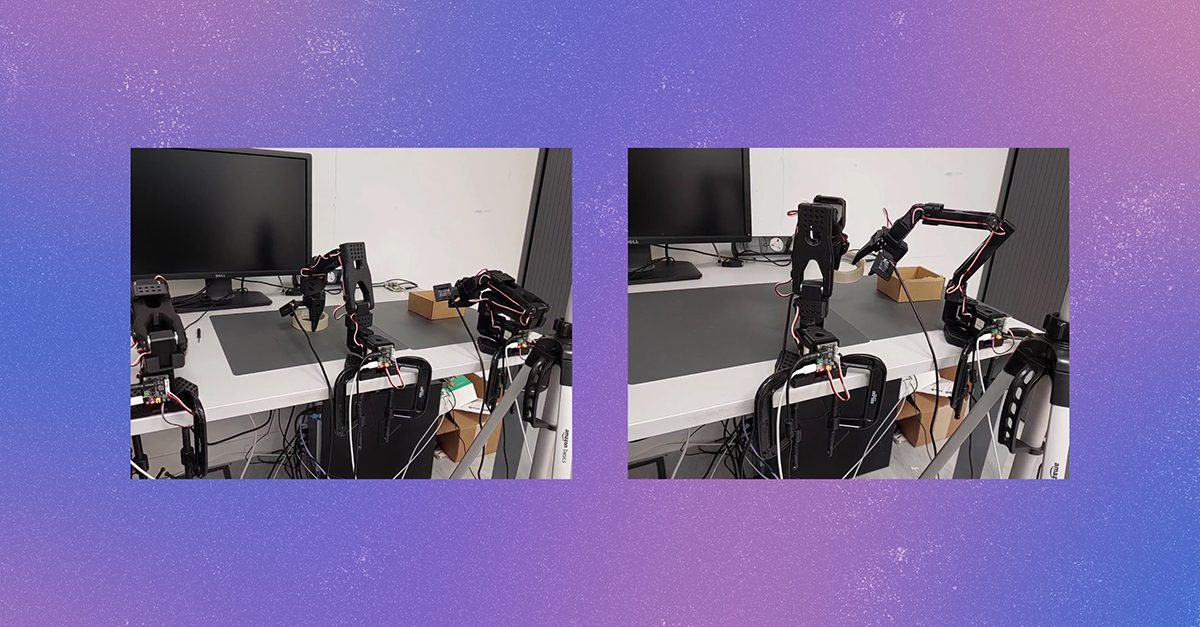
Microsoft has published a technical study advocating for offloaded inference infrastructure in physical AI and robotics, challenging the industry standard of mounting dedicated GPUs directly onboard. Conducting a systematic study on mobile robotic manipulation tasks, researchers evaluated performance across mapping, navigation, and manipulation using various onboard, edge, and cloud compute configurations.
The evaluations revealed that onboard compute constraints severely limit performance. Lighter GPUs caused a 30% drop in timely obstacle detection during navigation, slowed mapping and planning by up to 383% relative to an A100 GPU, and reduced vision-language-action (VLA) model accuracy by 50%. Conversely, offloading inference to edge or cloud GPUs resolved memory bottlenecks and maintained operational speed.
Microsoft argues that as physical AI models grow in size, offloading compute addresses critical hardware trade-offs regarding onboard power draw, thermal limits, weight, and component costs. The findings suggest future robotics deployments will rely heavily on optimized cloud and edge systems infrastructure rather than purely onboard hardware scaling.
Why it matters
Challenges current hardware architecture assumptions by proving cloud/edge offloading outperforms onboard GPU processing.
Reduces hardware weight, bill-of-materials costs, and battery drain for commercial robotics deployments.
Informs cloud infrastructure strategy for serving low-latency, high-throughput physical AI workloads.
Source: microsoft.com