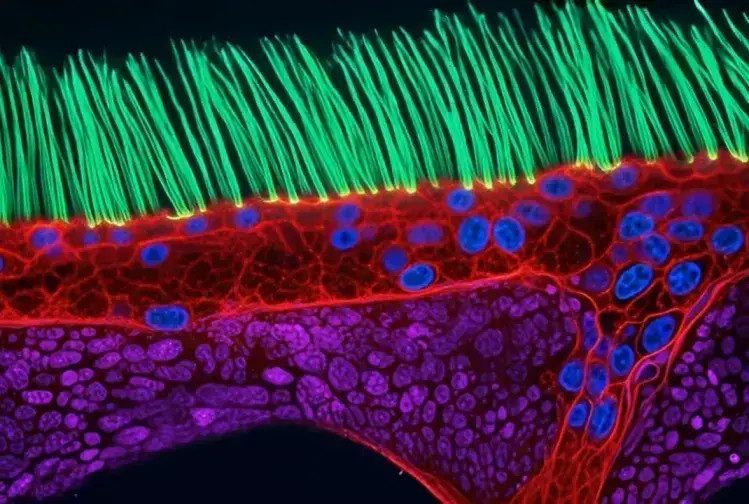
Nikon has revoked the top prize in its 16th annual Small World in Motion scientific photography contest after an investigation confirmed the winning entry contained AI-generated content. The video, submitted by Dr. Ning Xu of Tsinghua University, depicted microscopic cilia beating in the airways of a patient with a rare respiratory disorder. However, researchers flagged structural abnormalities in the footage, noting that cellular features appeared and disappeared unnaturally.
Concerns escalated when researchers identified a watermark indicating AI generation within the source image. In a post on LinkedIn, Xu acknowledged utilizing AI during post-processing to visualize reconstructed grayscale images, but denied generating the video or cilia movements. Nikon concluded that Xu violated competition rules, subsequently reassigning the top award to runner-up Nguyen Nam Nhat of Vietnam.
The incident highlights growing challenges surrounding synthetic media detection in scientific and professional creative competitions. Following the investigation, Nikon announced plans to revisit its rules and evaluation procedures for future contests to safeguard entry authenticity.
Why it matters
Scientific and creative competitions must implement stricter verification workflows as generative media tools become harder to distinguish from authentic visual data.
Organizations relying on visual media for peer review or public awards face reputational risks without robust raw data audit trails.
Source: techspot.com