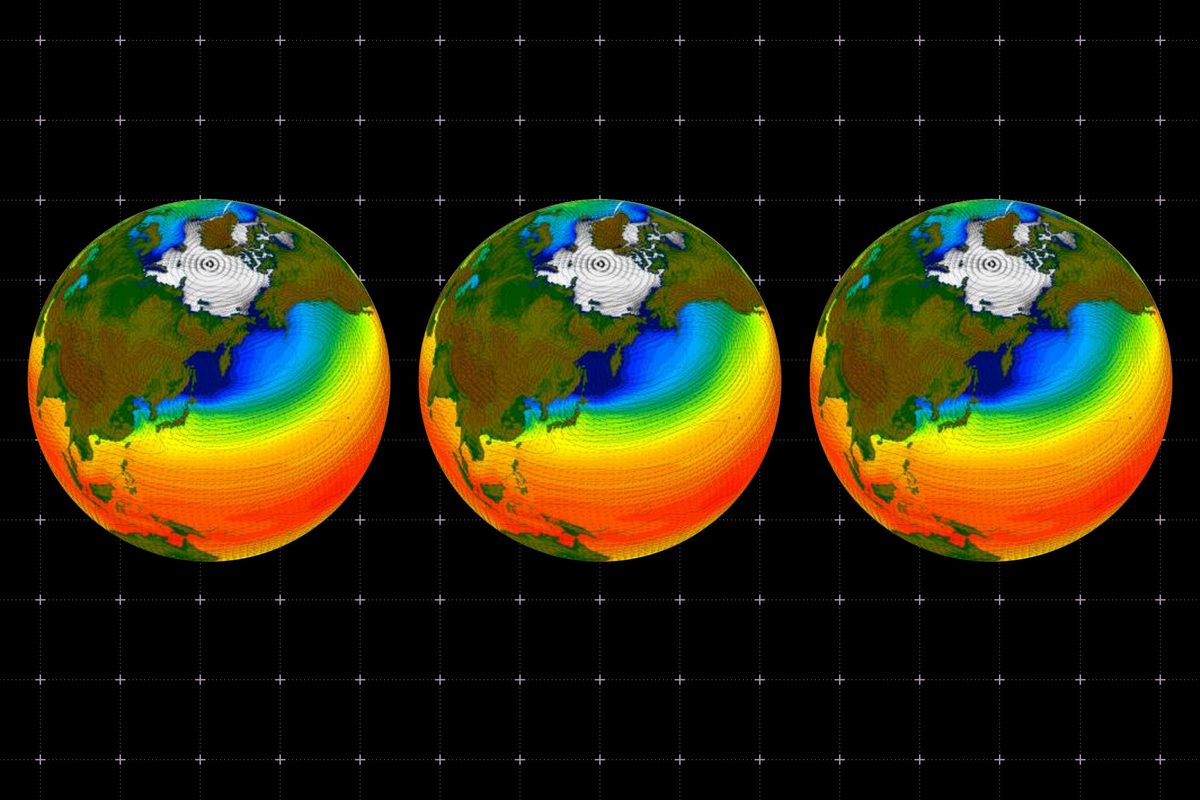
Researchers at MIT have developed a training technique that significantly reduces the data required to build reliable AI climate emulators. These specialized surrogate models simulate complex earth system models (ESMs) in seconds rather than months, allowing scientists and policymakers to quickly run thousands of climate scenarios.
Published in the Proceedings of the National Academy of Sciences, the method leverages optimized synthetic datasets to train emulators faster without sacrificing accuracy. Traditional climate emulators often fail when exposed to unfamiliar scenarios, but the MIT team demonstrated that models trained with their targeted synthetic data adapt accurately to unseen future emissions trajectories.
By drastically lowering the computational overhead and time required to generate climate projections, the technique enables faster evaluation of regional environmental interventions and infrastructure resilience plans. The research team included contributors from ETH Zurich, Imperial College London, and MIT’s Center for Sustainability Science and Strategy.
Why it matters
Reduces compute costs and time needed to train accurate domain-specific AI surrogate models.
Enables rapid modeling of policy and infrastructure risk scenarios using data-efficient synthetic training sets.
Improves generalization of scientific AI models when evaluating out-of-distribution real-world scenarios.
Source: news.mit.edu