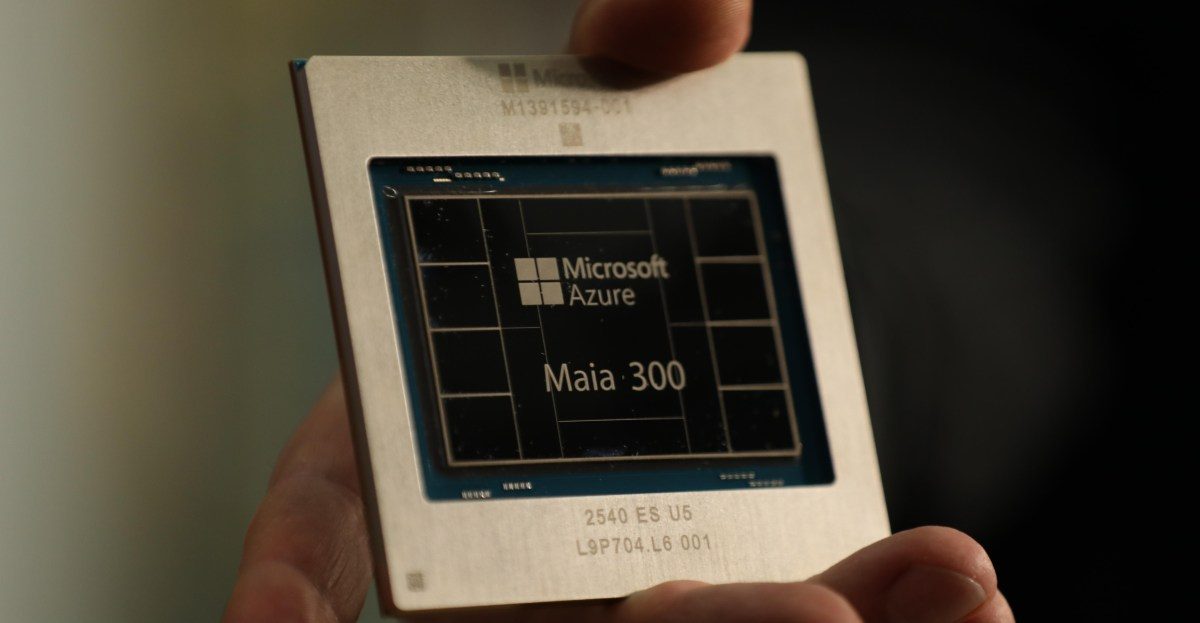
Microsoft unveiled Maia 300, its third-generation custom AI chip designed to serve as the primary inference platform for Microsoft products and services. Built on TSMC’s N2P process node using a chiplet architecture, the accelerator is scheduled to roll out to production AI workloads starting in 2027.
According to Microsoft, Maia 300 delivers 40 percent more tokens per megawatt compared to leading GPU systems and up to 7x the rack-scale token throughput of Maia 200 in a 96-accelerator configuration. The chip is tailored for long-context reasoning, latency-sensitive conversational AI, and multi-step agentic tasks.
The custom silicon deployment aims to reduce Microsoft’s reliance on hardware suppliers like NVIDIA and AMD. Microsoft AI CEO Mustafa Suleyman emphasized that co-designing hardware alongside internal AI models is critical for running enterprise AI workloads at multi-gigawatt scale.
Why it matters
Big Tech hyperscalers are aggressively transitioning to proprietary silicon to reduce reliance on NVIDIA and cut inference operating costs.
Multi-gigawatt internal hardware deployments signal a long-term infrastructure shift toward dedicated agentic and reasoning accelerators.
Source: theverge.com