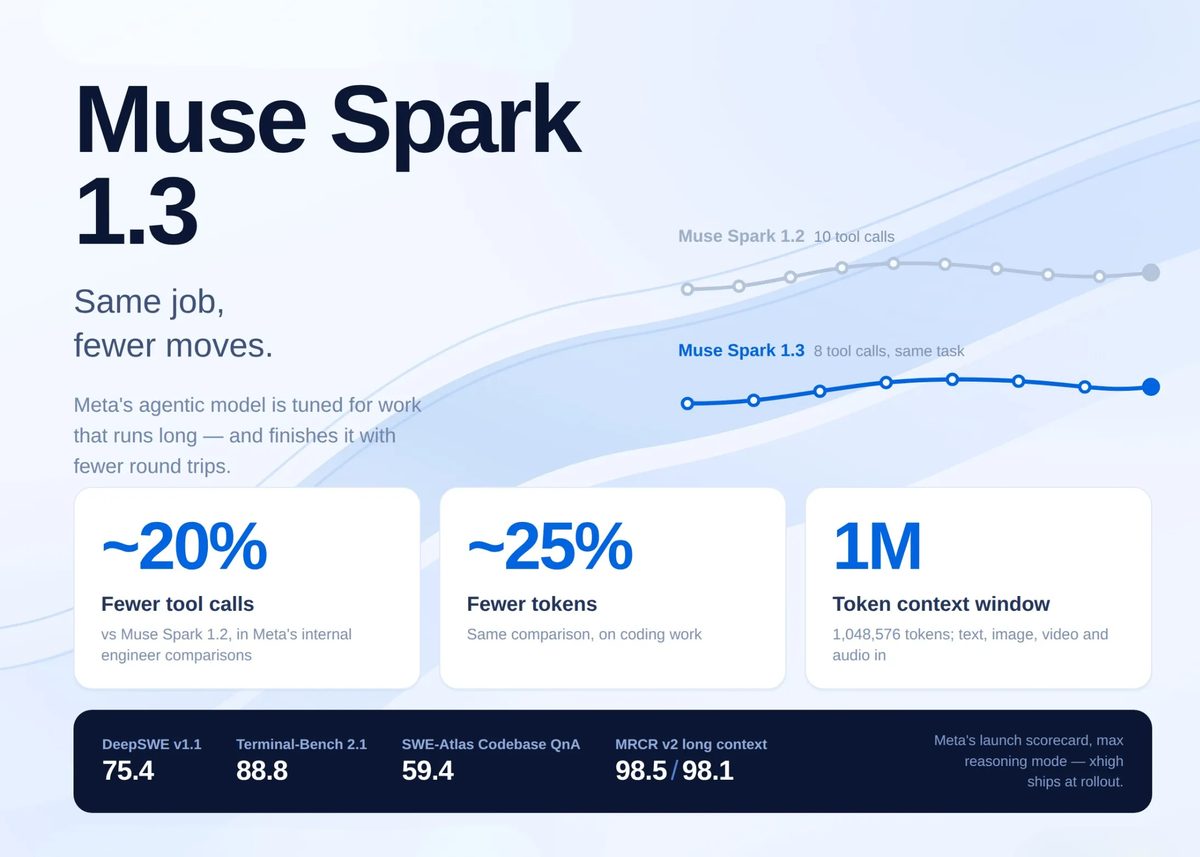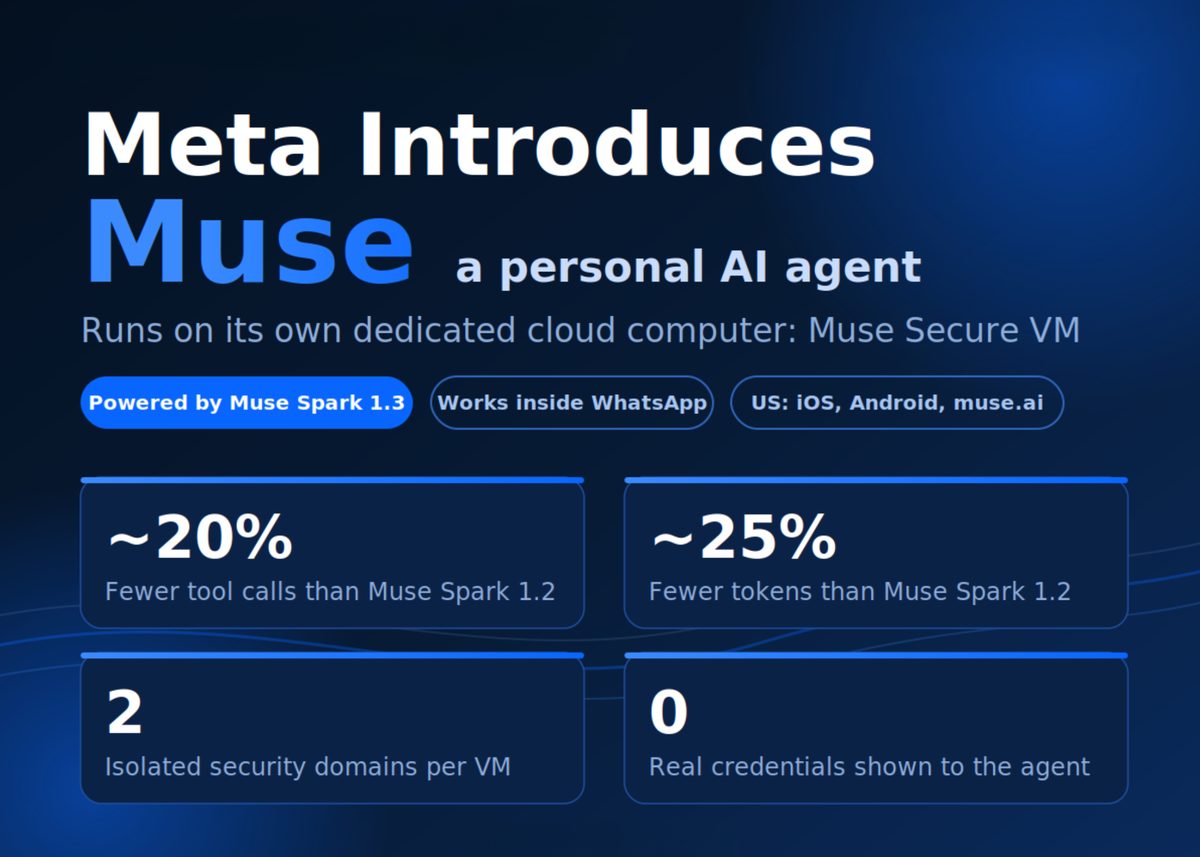
Meta has detailed the underlying architecture behind its newly launched Muse agent, introducing a dedicated virtual machine system called Muse Secure VM alongside the Muse Spark 1.3 foundation model. Designed by Meta Superintelligence Labs, Muse Spark 1.3 targets long-horizon agentic workloads such as zero-shot CLI tool calling and self-correction, using 20% fewer tool calls and 25% fewer tokens than its predecessor. The model is accessible today via the Meta Model API, with open weights scheduled for future release.
To prevent prompt injection and credential theft, Meta deployed a rigorous security harness around the agent runtime using systemd-nspawn cells with filtered syscalls. Real credentials are replaced with placeholder tokens using surrogation, while an independent security agent named Sentinel evaluates every network request and connector action at layer 4 and layer 7 before execution. Additionally, eBPF taint tracking at the kernel level gates execution based on whether data touched untrusted user inputs.
The browser sub-agent operates strictly through accessibility trees without raw DOM access or JavaScript execution capabilities, while email connectors automatically filter sensitive verification links. This release provides a technical template for enterprise and consumer AI developers struggling to secure autonomous agents against prompt injection attacks.
Why it matters
Credential surrogation and kernel-level eBPF tracking establish a novel blueprint for preventing prompt injection in agent architectures.
Muse Spark 1.3 provides developers with a more efficient agentic model optimized for CLI calls and multi-thread workflows.
Meta’s plan for open-weights model releases continues to pressure closed-source AI ecosystem vendors.
Source: marktechpost.com