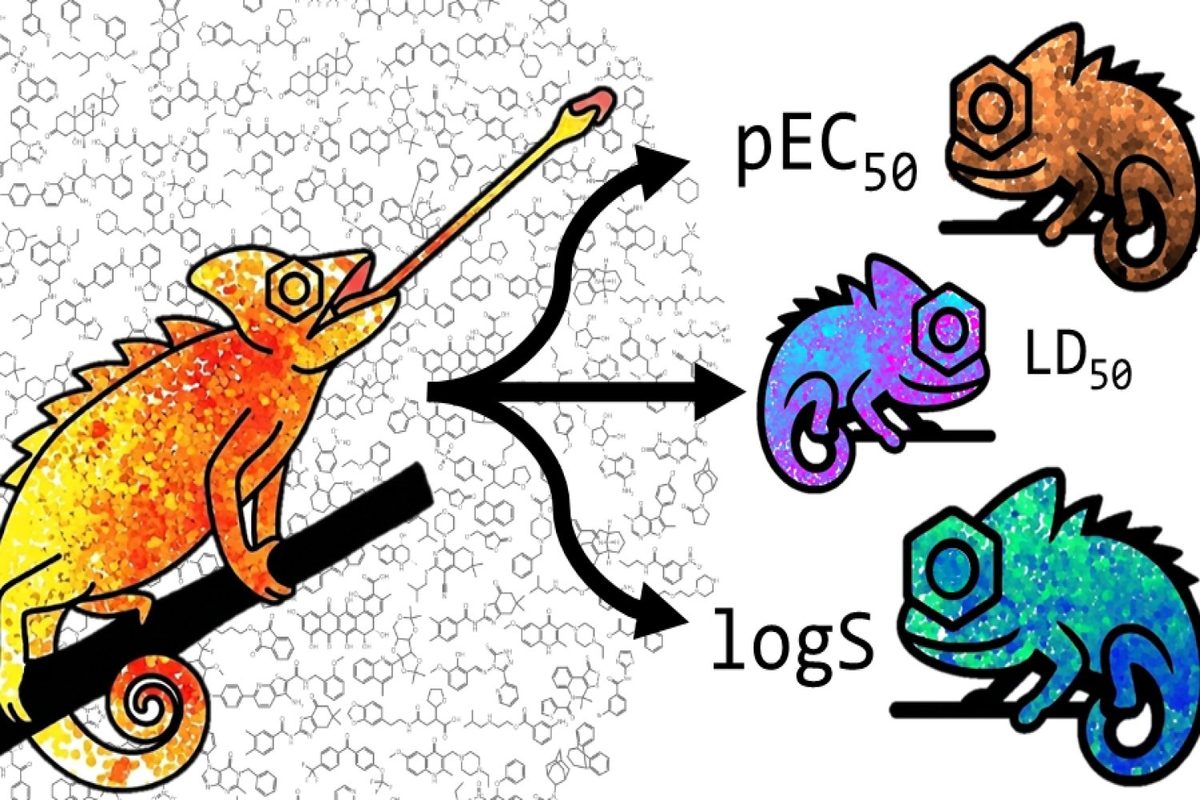
Researchers at MIT have introduced CheMeleon, an open-source machine learning model designed to accurately predict chemical compound behaviors when experimental data is scarce. Published in the Journal of Chemical Information and Modeling, the tool was built using the open-source ChemProp framework developed by Professor William Green’s lab in collaboration with researchers from BASF.
CheMeleon achieves its predictive performance by pre-training on structural data from one million molecules across 1,600 established chemical descriptors. This enables the model to identify deep structural correlations, which can then be fine-tuned to forecast complex properties including solubility, viscosity, bioactivity, and specific target binding affinities.
The model has gained rapid adoption across the pharmaceutical industry after nine of the top 20 entries in a recent OpenADMET property prediction contest utilized CheMeleon. Several drug discovery companies have integrated the tool directly into their early-stage research pipelines to screen candidate molecules prior to physical synthesis.
Why it matters
Biotech founders can accelerate early-stage hit-to-lead discovery cycles while reducing physical lab testing expenses.
R&D teams gain a proven open-source foundation for zero-shot and few-shot molecular property prediction.
Pharma investors can look for startups leveraging CheMeleon to lower candidate failure rates in pre-clinical screening.
Source: news.mit.edu