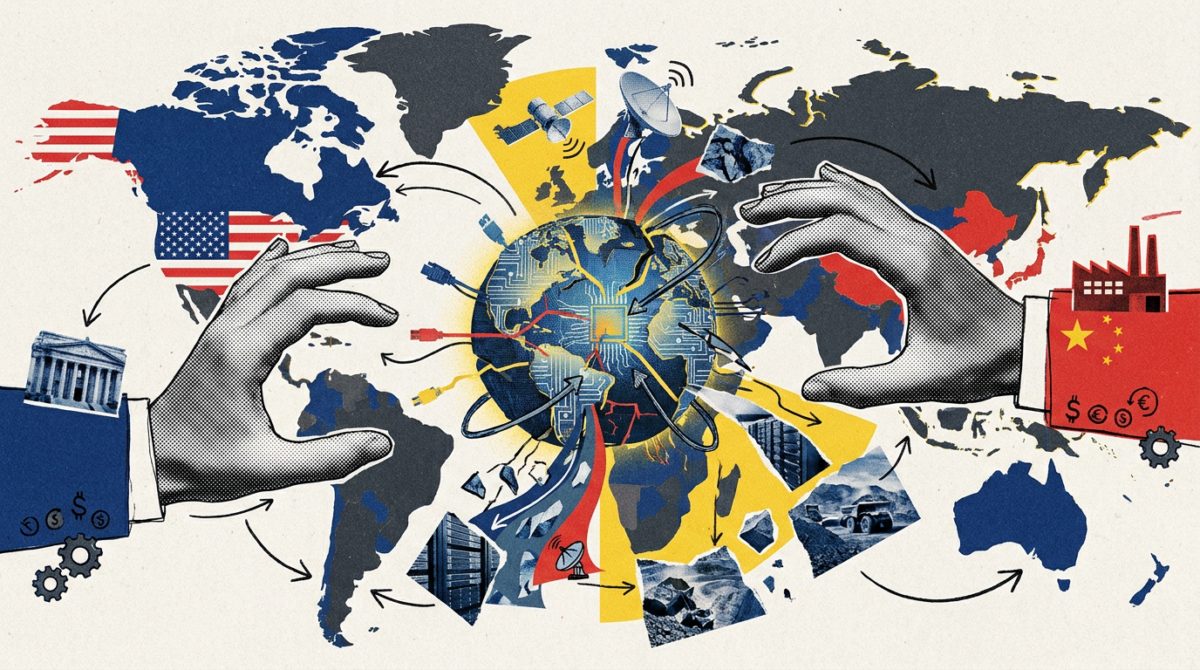
In a Foreign Affairs essay, former Google CEO Eric Schmidt, historian Niall Ferguson, and researcher Lisa Klaassen argue that top AI labs like OpenAI and Anthropic function similarly to historical colonial trading companies. According to the authors, access to frontier AI has become a scarce geopolitical asset dictated by immense capital expenditures, compute availability, and energy infrastructure, forcing non-participating nations into economic dependency.
The authors highlight stark strategic divergences between superpowers: the US focuses on closed, high-cost models tied to political alignment, while China distributes open-weight models to establish international standards. However, both nations face severe constraints, including energy infrastructure shortages in the US, chip supply limitations in China, and massive debt load risks from planned tech investments exceeding $600 billion in 2026.
The essay warns that rising sovereign debt, domestic opposition to infrastructure like data centers, and vulnerabilities around TSMC in Taiwan present systemic risks to the stability of the global AI supply chain.
Why it matters
Highlights geopolitical risks and regulatory export controls affecting international model access and deployment strategies.
Underscores energy and hardware supply constraints as primary capital allocation hurdles for scale-up plans.
Signals potential shift toward sovereign AI infrastructure investments and diplomatic trade restrictions.
Source: the-decoder.com