Google DeepMind has unveiled Gemini Robotics 2.5, an upgraded physical AI platform that improves performance for real-world robotic tasks. The release features updates to the vision-language-action (VLA) model, delivering a 30 to 100 percent increase in task success rates and a 20 to 30 percent speed improvement over previous versions in lab testing. The platform demonstrated enhanced dexterity on complex tasks, such as Apptronik’s Apollo 2 humanoid robot tying a bow with five-fingered hands.
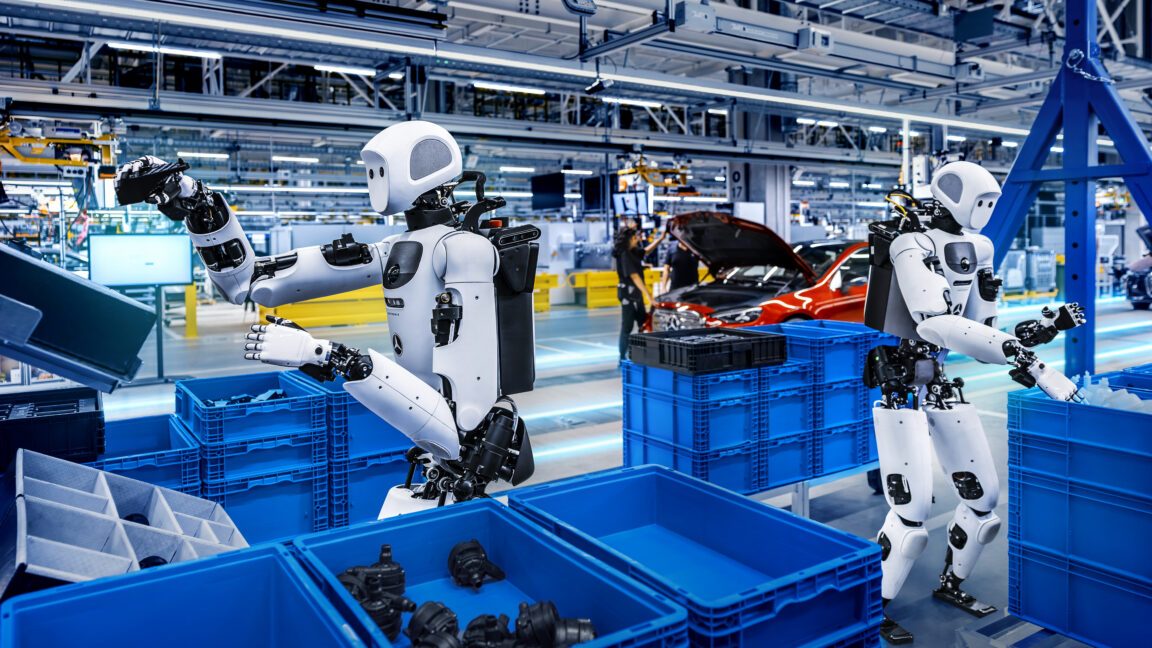
To train the model, DeepMind utilized its Gemini 4 Argon system to build a simulation engine based on real-world camera data. This synthetic “digital twin” data, combined with teleoperation demonstrations, enabled Gemini Robotics 2.5 to generalize to new environments faster. In real-world trials, Gemini-powered Apollo 2 robots achieved a 96 percent success rate kitting automotive components in Mercedes-Benz factories.
Despite these gains, DeepMind executives noted that closing the final 4 percent gap to match human reliability in factory settings presents a significant ongoing technical challenge. Balancing general-purpose adaptability with high-precision industrial requirements remains a core hurdle for deployment.
Why it matters
Validates the use of frontier LLMs to generate synthetic simulation data for training physical robotics and overcoming real-world data bottlenecks.
Demonstrates progress toward general-purpose industrial humanoids through deployments with enterprise partners like Mercedes-Benz.
Highlights the persistent reliability gap (96% vs human near-perfection) that founders must solve before full autonomous factory deployment.
Source: arstechnica.com