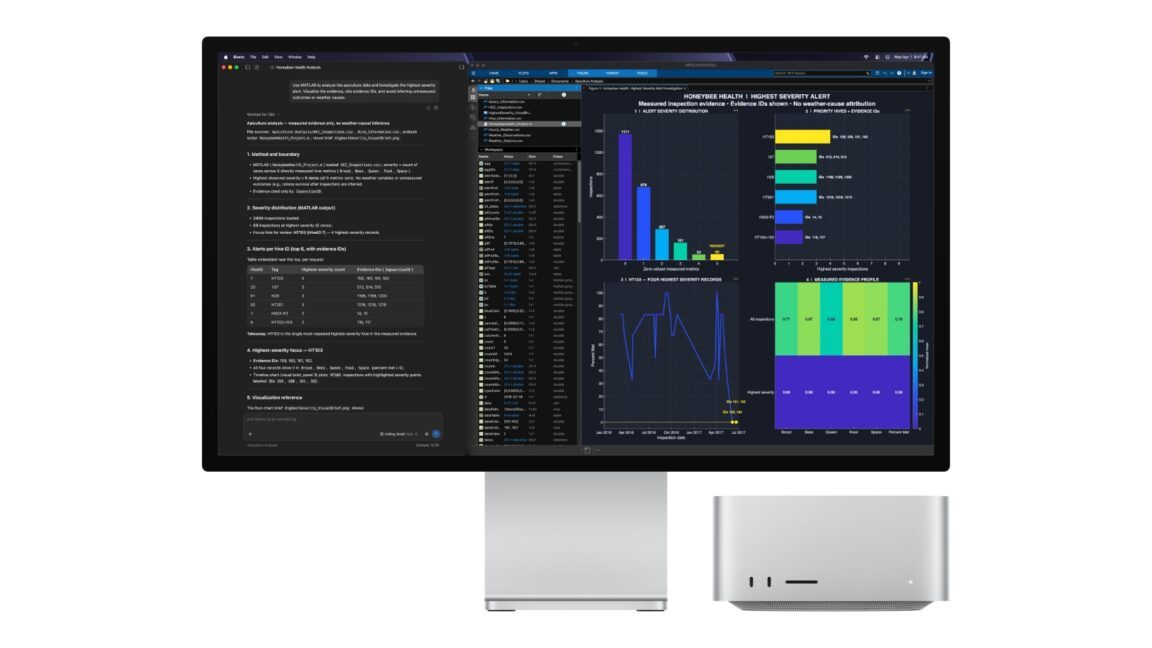
Apple has refreshed its Mac desktop lineup with new Mac mini and Mac Studio computers powered by its latest silicon generation. The updates introduce the 2nm M6 chip—featuring a 12-core CPU configuration and up to 160GB/s memory bandwidth—and the high-end M5 Ultra, which offers up to 512GB of unified memory and 1.2TB/s bandwidth to target heavy machine learning workloads.
While the announcements focus primarily on hardware specification upgrades, Apple explicitly highlighted local AI inference and development as core use cases driving the designs. The trend has expanded rapidly since macOS 26.2 added Thunderbolt 5 low-latency networking, allowing developers to cluster multiple Mac desktops via the open-source MLX framework to execute large open-weight models locally.
By scaling unified memory capacities and interconnect performance, Apple is positioning its desktop hardware as an accessible, local alternative to cloud-based GPU instances for AI developers running open-weights.
Why it matters
Provides AI developers high-memory local hardware to run large open-weight models without relying on costly cloud GPUs.
High unified memory bandwidth (up to 1.2TB/s) makes Mac Studio hardware a competitive target for local model inference.
Validates open-source local framework ecosystems like Apple’s MLX as viable tooling for AI software development.
Source: arstechnica.com