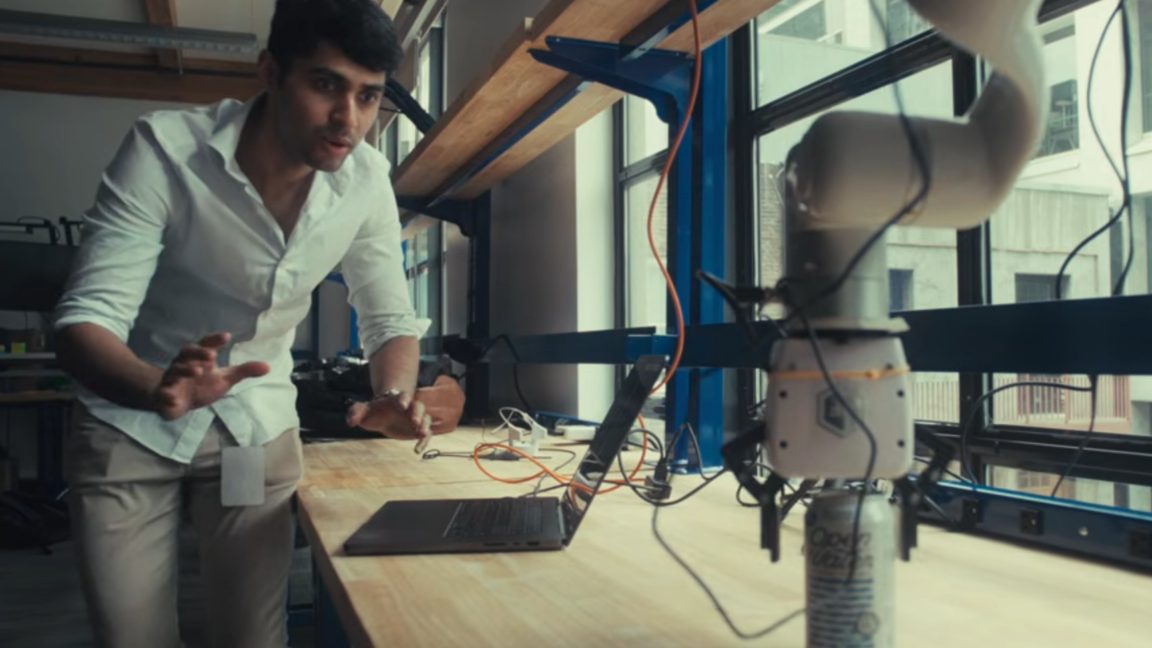
Anthropic has released a research preview of the Model Hardware Standard (MHS), an open set of standardized drivers designed to allow AI agents to control physical hardware devices. Inspired by laboratory automation challenges at the HHMI Janelia Research Campus, MHS creates a universal interface that allows lab instruments, sensors, and actuators to communicate over a network without requiring custom integration software.
When combined with Anthropic’s Model Context Protocol (MCP), MHS enables models like Claude to execute complex real-world workflows using natural language. The standard includes a physical metadata tagging framework that exposes device constraints—such as weight limits, movement ranges, and safety thresholds—directly to the model. In initial demonstrations, AI agents successfully calibrated multi-component optical experiments and operated robotic arms without task-specific fine-tuning.
By moving model capabilities beyond digital environments, Anthropic aims to compress laboratory setup times from weeks to minutes. The framework allows agents to independently run experiments, adjust operational parameters in real time, and recover from mechanical errors using standardized API scripts.
Why it matters
Expands AI agent capabilities from software and data tasks into direct control of physical hardware and scientific instruments.
Establishes standardized safety and constraint tagging for autonomous models operating real-world machinery.
Source: arstechnica.com