Anthropic has released guidance instructing users to update their prompting techniques for Claude Opus 5.5, which is now the default model for Pro, Max, Ultra, and Team subscribers. According to the company, legacy prompting habits developed for older model generations actively hinder the new model’s performance and execution speed.
Key recommendations include removing phrases like “think hard” or “think carefully,” as Opus 5.5 features adaptive reasoning that scales automatically to the task. Anthropic also suggests using the default “Medium” effort setting, noting that Medium internal tests matched the performance of Opus 5 on “High.” Additionally, the company recommends consolidating instructions into a single initial prompt and attaching raw files or images directly rather than manually transcribing data.
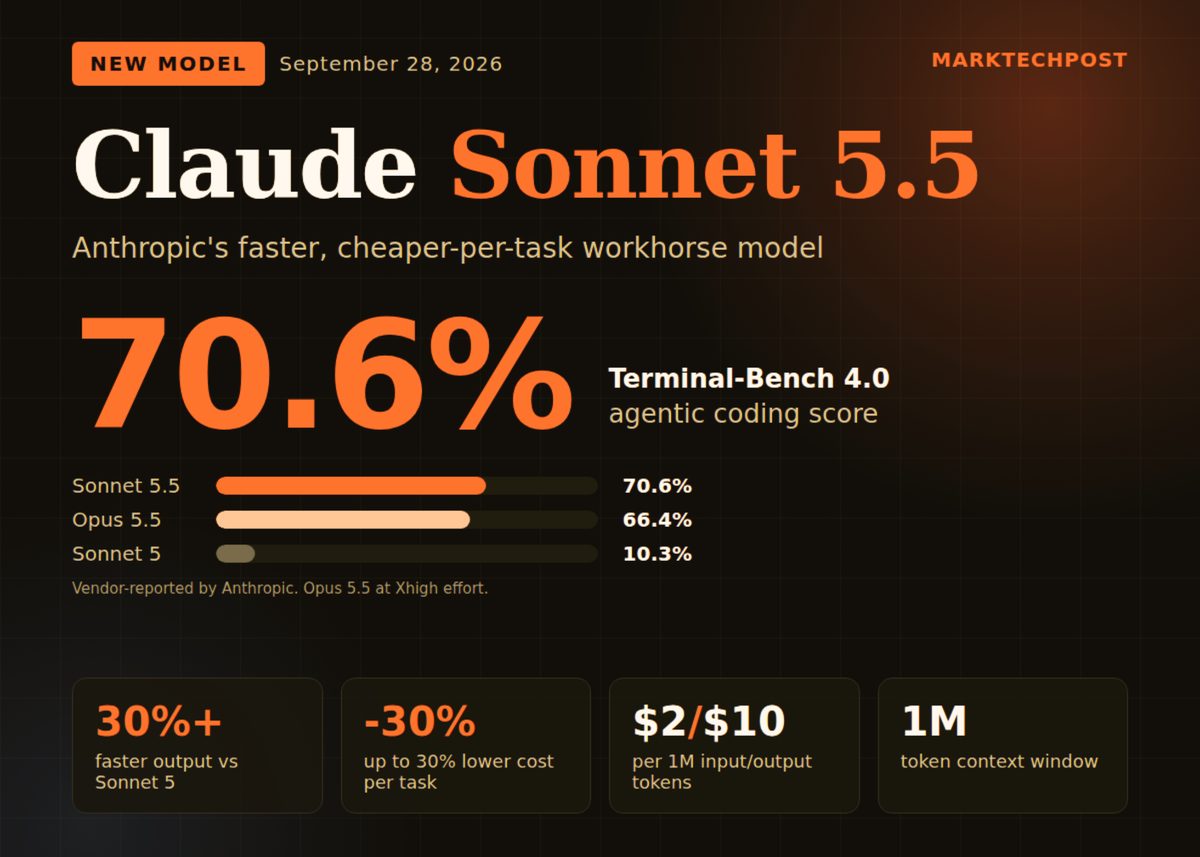
Anthropic further advised enterprise teams using Sonnet at high effort levels to reconsider Opus 5.5. Because Opus 5.5 completes complex tasks in fewer execution steps and frequently generates finished documents in a single pass, Anthropic states that its effective cost can match or beat heavily prompted Sonnet workflows.
Why it matters
Developers and operators should audit prompt pipelines to remove legacy steerability phrases and reduce API latency.
Enterprise users can optimize compute spend by evaluating Opus 5.5 on Medium effort instead of maxing out lower-tier models.
Product teams can streamline UI workflows by leaning on single-prompt multi-step execution rather than iterative chaining.
Source: the-decoder.com