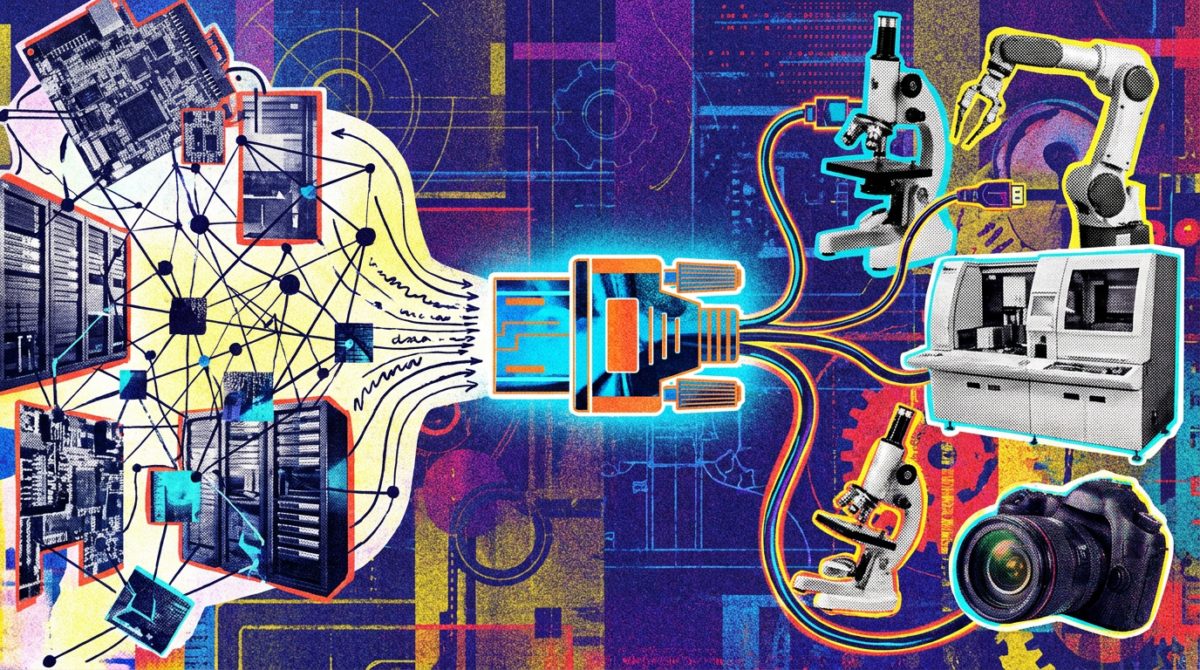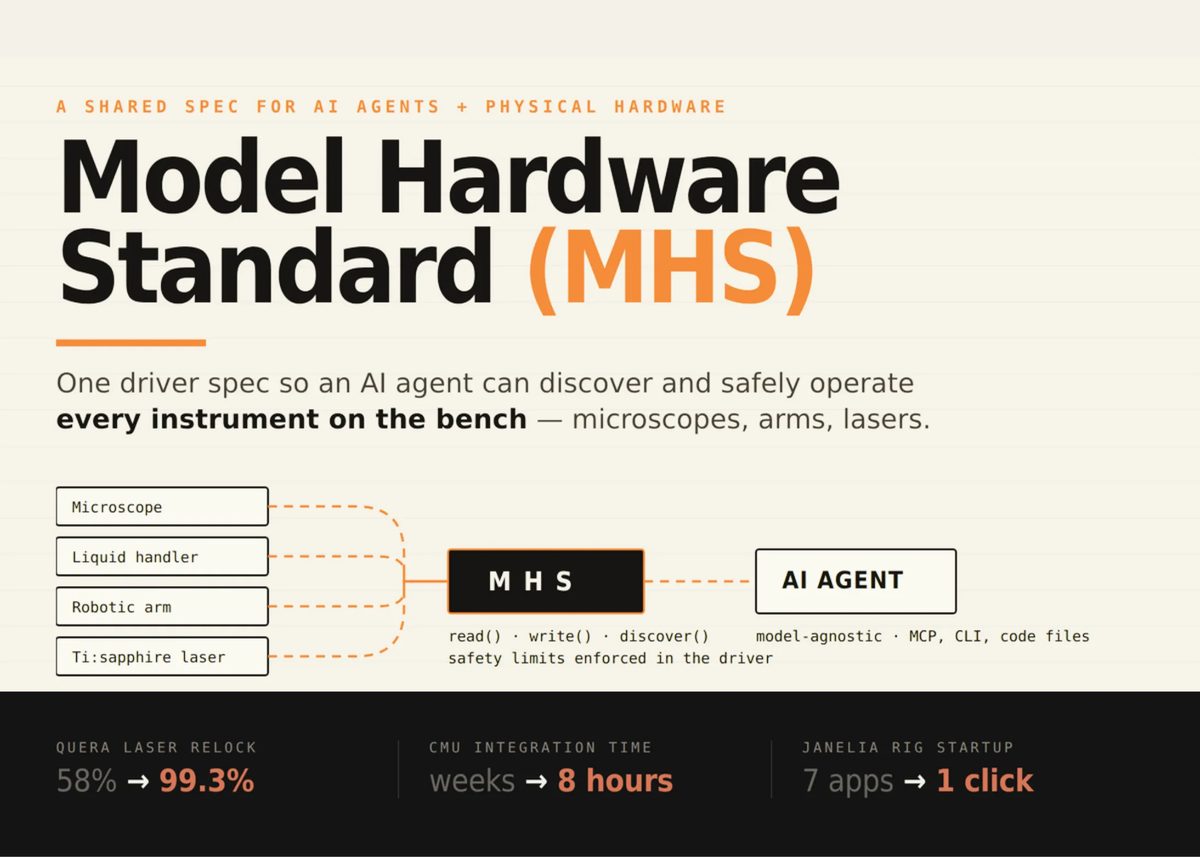
Anthropic announced a research preview of the Model Hardware Standard (MHS), an open specification designed to standardize how AI agents discover, interface with, and control physical lab and industrial hardware. The standard sits at the driver layer between operating systems and devices, providing basic primitives such as read, write, and discovery. By eliminating bespoke translator scripts between disparate vendor equipment, Anthropic claims MHS reduces physical hardware setup times from weeks to hours.
Early testing highlights significant improvements in complex physical automation. At QuEra Computing, an MHS-managed agent loop achieved a 99.3% success rate on laser-relock operations, running in 10 to 14 seconds compared to human manual interventions taking up to 10 minutes. Similarly, Genentech used the standard with Claude to automate protein assays across liquid handlers, robotic arms, and plate readers, optimizing fluid transfers based on liquid viscosity.
Built to work alongside the Model Context Protocol (MCP), MHS is model-agnostic and includes safety limits embedded directly within device reference drivers. This abstraction layer allows general-purpose models to automate lab experiments and factory floor operations without custom low-level integrations.
Why it matters
Creates a unified hardware-agent interface layer, significantly lowering technical friction for deploying AI agents in physical laboratories and manufacturing.
Reduces integration setup times from weeks to hours for physical automation startups and enterprise hardware fleets.
Standardizes physical safety constraints at the driver layer, preventing agent operations from executing out-of-bounds mechanical actions.
Source: marktechpost.com