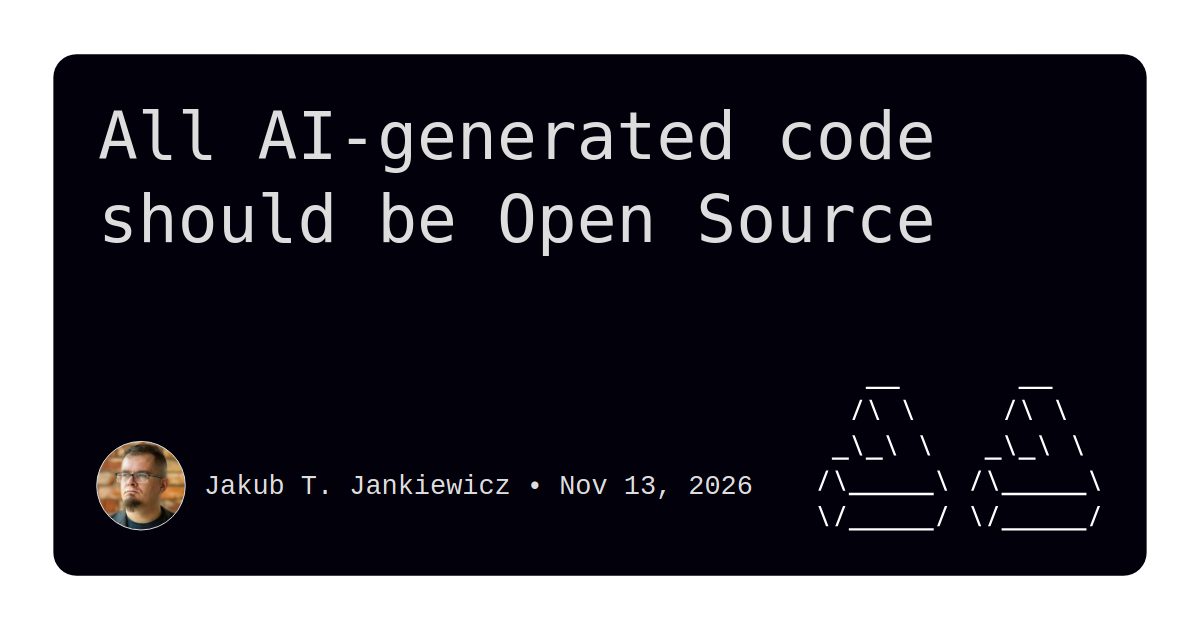
Software developer Jakub Jankiewicz argues that all source code generated by artificial intelligence models should be mandatorily released under Open Source or Creative Commons Zero (CC0) public domain licenses. The rationale stems from the fact that foundational AI models were trained by scraping open-source repositories and online developer communities—such as GNU project archives and Stack Overflow—often without explicit permission or legal attribution. Converting this shared knowledge base into closed-source commercial software represents a form of license laundering.
The argument also highlights legal precedents regarding non-human authorship and intellectual property rights. Under legal rulings such as the U.S. Copyright Office guidelines influenced by the Monkey Selfie case, pure machine-created output lacks human creativity and is ineligible for copyright protection. While some jurisdictions like the UK grant limited rights to computer-generated works, applying open licenses globally establishes consistency.
As engineering workflows rely increasingly on unedited AI output, the distinction between human and automated contribution is blurring. Proponents contend that code produced primarily through text prompts with minimal human intervention belongs in the public domain to sustain the open-source software ecosystem that made modern AI development possible.
Why it matters
Raises compliance and legal considerations regarding ownership and copyright enforceability of AI-generated software.
Addresses legal risks surrounding code generation models trained on copyleft open-source datasets.
Encourages engineering teams to audit human contribution levels in software repositories to determine licensing status.
Source: jakub.jankiewicz.org