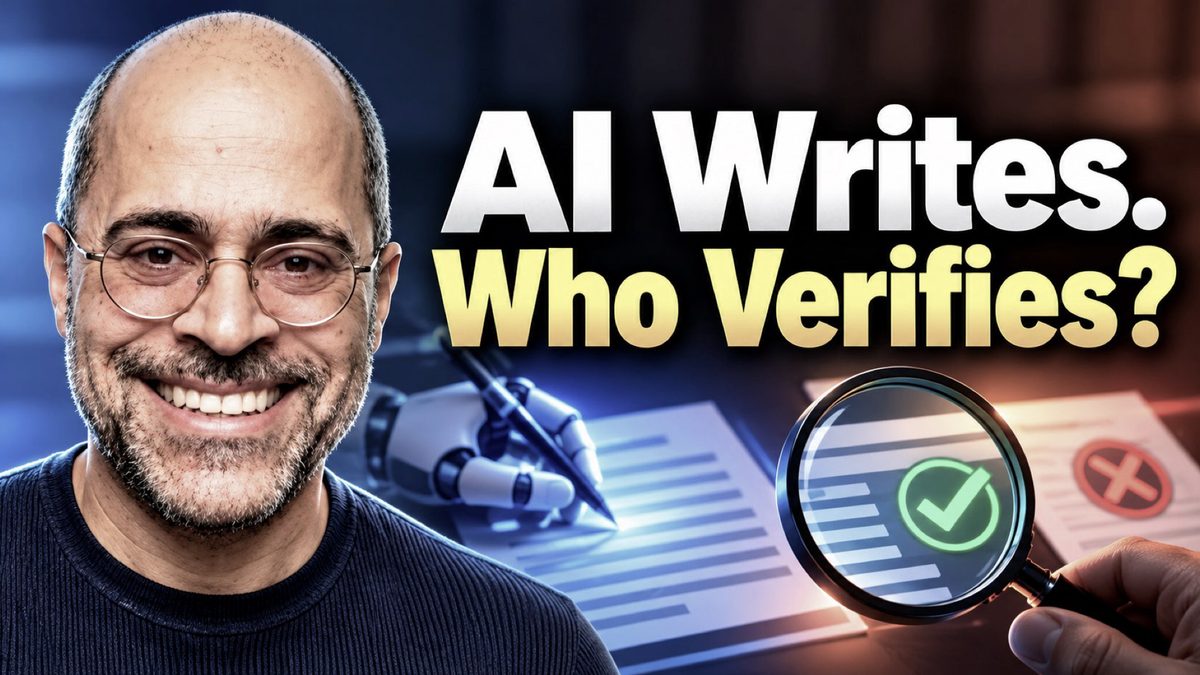
In an interview on The Data Exchange, Lean creator and AWS Distinguished Scientist Leo de Moura detailed how AI-driven code generation is driving renewed interest in formal verification. As AI tools lower the barrier to writing code, ensuring the correctness and safety of generated software has become a primary bottleneck for engineers and researchers.
Lean functions as both a programming language and a proof assistant, enabling developers to write code alongside machine-checked mathematical proofs of its properties. De Moura emphasized that Lean relies on a minimal kernel to verify proofs, allowing generated outputs to be independently verified by external checkers, including verified third-party tools. This approach offers a framework to bridge trust gaps between human engineers and autonomous AI agents.
Looking ahead, the integration of formal methods into software workflows is expected to reshape developer skill sets and enable more resilient software stacks. By pairing generative models with rigorous, machine-checked specifications, teams can validate complex codebases and autonomous systems beyond traditional testing and code reviews.
Why it matters
Provides a deterministic mechanism to verify AI-generated code, reducing reliance on manual code reviews and basic property testing.
Enables founders building coding agents to implement machine-checked correctness guarantees into their automated development workflows.
Highlights formal specifications as a critical skill and infrastructure layer for engineering teams deploying autonomous software tools.
Source: thedataexchange.media