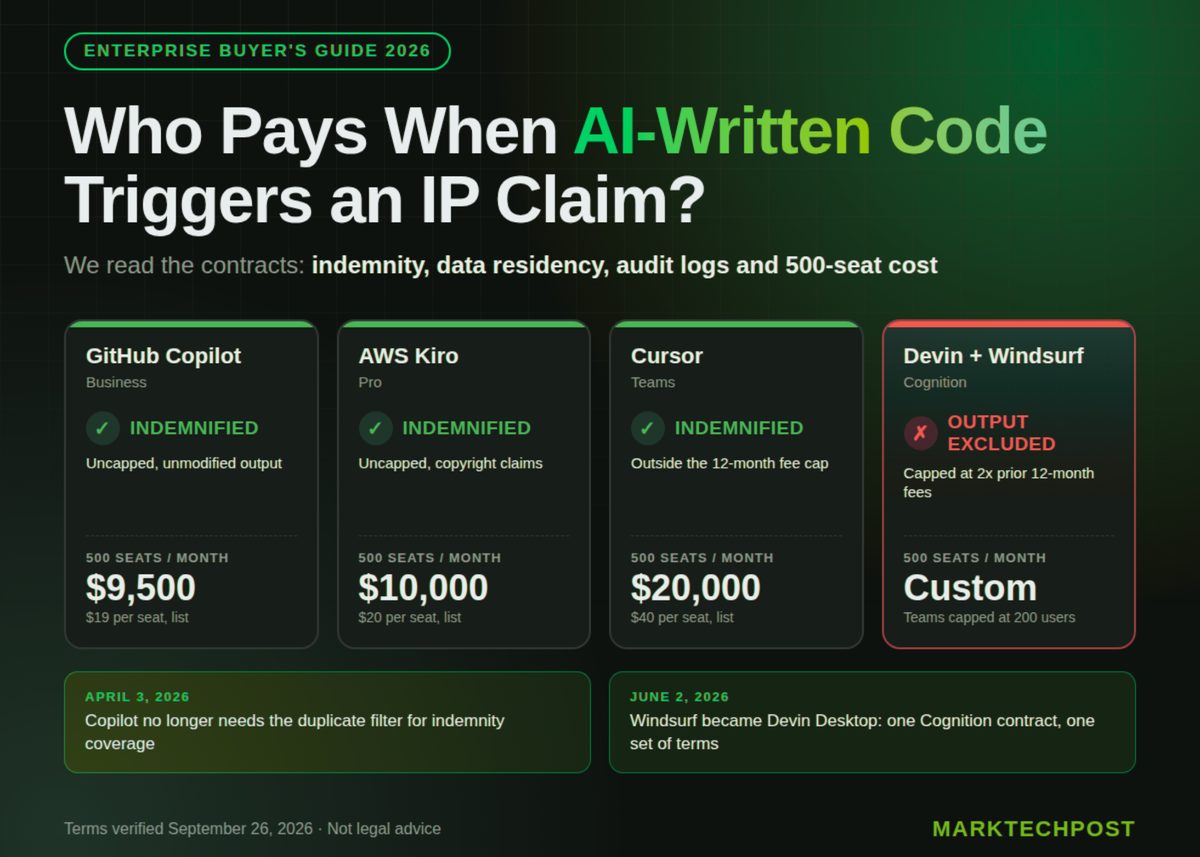
An analysis of current enterprise contracts for GitHub Copilot, AWS Kiro, Cursor, and Cognition (Devin/Windsurf) highlights critical legal and operational differences for engineering teams. Intellectual property indemnity policies vary significantly across vendors: Microsoft and AWS provide copyright protections subject to usage terms, while Cursor limits coverage in consumer plans and Cognition explicitly excludes generated output data from its standard indemnity claims while capping liability at twice trailing fees.
Data retention and regional hosting compliance present additional procurement constraints. While GitHub Copilot and AWS Kiro offer customer options to restrict inference data processing to US or European regions—often at an added credit cost—Cursor currently processes requests through its backend without selectable processing regions. Enterprise tiers across most platforms guarantee that customer prompts are excluded from future base model training.
Recent corporate realignments are also shifting licensing structures, as seen with Cognition’s acquisition of Windsurf and its rebranding to Devin Desktop under unified pricing terms. Procurement leads must evaluate how minor code modifications impact indemnity coverage before initiating large-scale seat deployments.
Why it matters
Legal teams must scrutinize IP indemnity exclusions, as vendor terms differ dramatically on generated code liability.
Data residency rules vary across AI coding tools, potentially creating compliance issues for strict EU/US enterprise environments.
Procurement officers need to factor in region-pinning surcharges and seat minimums when budgeting enterprise developer tools.
Source: marktechpost.com