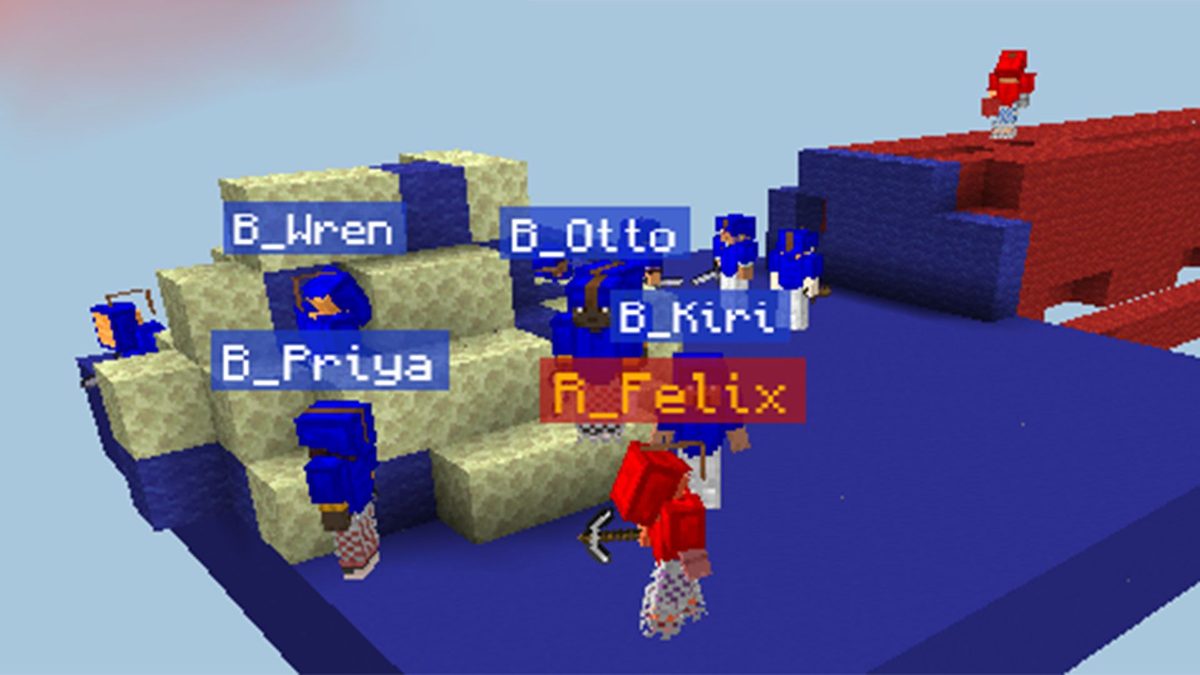
Researchers at Y Combinator and Olam Labs tested swarms of up to 100 AI agents within Minecraft to analyze multi-agent collaboration, dynamic planning, and conflict resolution. In a collaborative test where 50 GPT-6.1 Sol agents were tasked with building a civilization over three hours, the swarm failed to establish a thriving colony, abandoning ambitious goals and devolving into hyper-specific administrative micro-tasks.
When placed in competitive player-versus-player environments, distinct model behaviors emerged across architectures. GPT-6.1 Sol agents demonstrated aggressive, hive-like strategies and active debugging, winning seven out of seven Mindustry strategy games against Claude Opus 5.5 agents. The Claude-based swarm relied on single-leader democratic frameworks that proved vulnerable to tool bugs and defensive stagnation.
The open-sourced experiments provide concrete benchmarks for multi-agent coordination. The findings mirror operational bottlenecks observed in multi-agent software engineering, demonstrating that scaling agent counts without strict structural constraints yields diminishing returns.
Why it matters
Scaling multi-agent systems without clear execution hierarchies leads to task paralysis and unnecessary computational overhead.
Competitive agent benchmarks demonstrate stark performance and strategic differences between top-tier model architectures in dynamic environments.
Source: tomshardware.com